UF vs RO for PDAM Water: Which Filter Is Right for Jakarta Piped Supply
PDAM water in most Jakarta districts is chemically treated at source. The real threat is bacteria from old distribution pipes — and UF removes it without electricity or drain water. Here is how to choose between UF and RO by what your water actually contains.

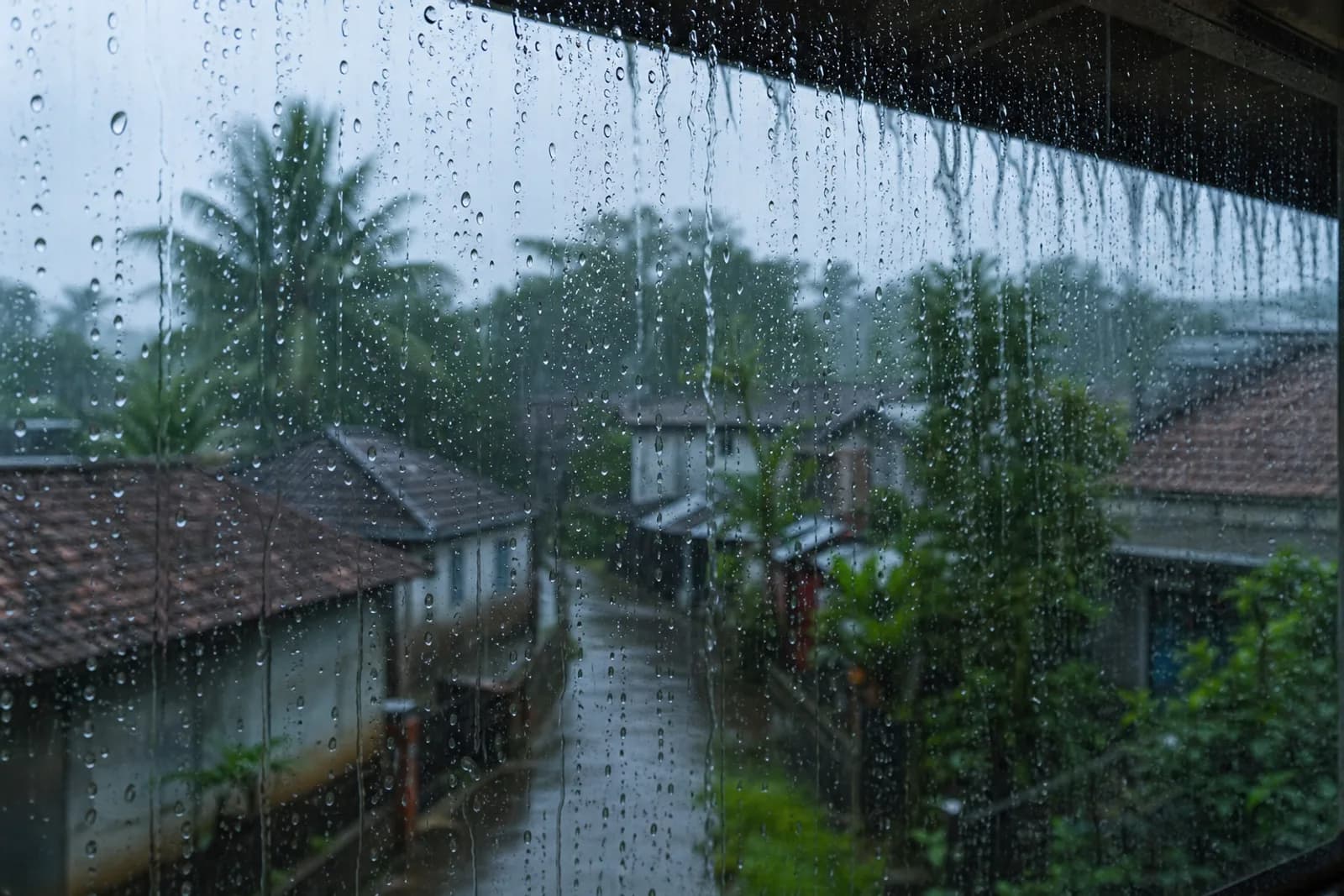
Jakarta's piped PDAM supply goes through chlorination and sedimentation before it leaves the treatment plant. By the time it reaches most homes in Tangerang, Bekasi, or South Jakarta, the dissolved mineral content is often within a reasonable range. The problem is the last stretch — old distribution pipes that can re-introduce bacteria and rust between the plant and your tap. That distinction matters a great deal when choosing a water purifier, because UF and RO solve different problems.
What PDAM water actually contains
Water from Jakarta's PDAM network draws largely from surface sources — rivers and reservoirs — though the exact source varies by district. It is treated to reduce turbidity, bacteria, and heavy metals before distribution. Chlorine is added as a disinfectant, which handles most biological contamination inside the treatment plant. TDS figures in this article are indicative; test your own supply — it varies by district and season. The TDS of Jakarta's piped supply typically falls somewhere in the range of 100–400 ppm as a rough guide — broadly similar to the treated supplies of many Asian cities, not the brackish well water of coastal suburbs.
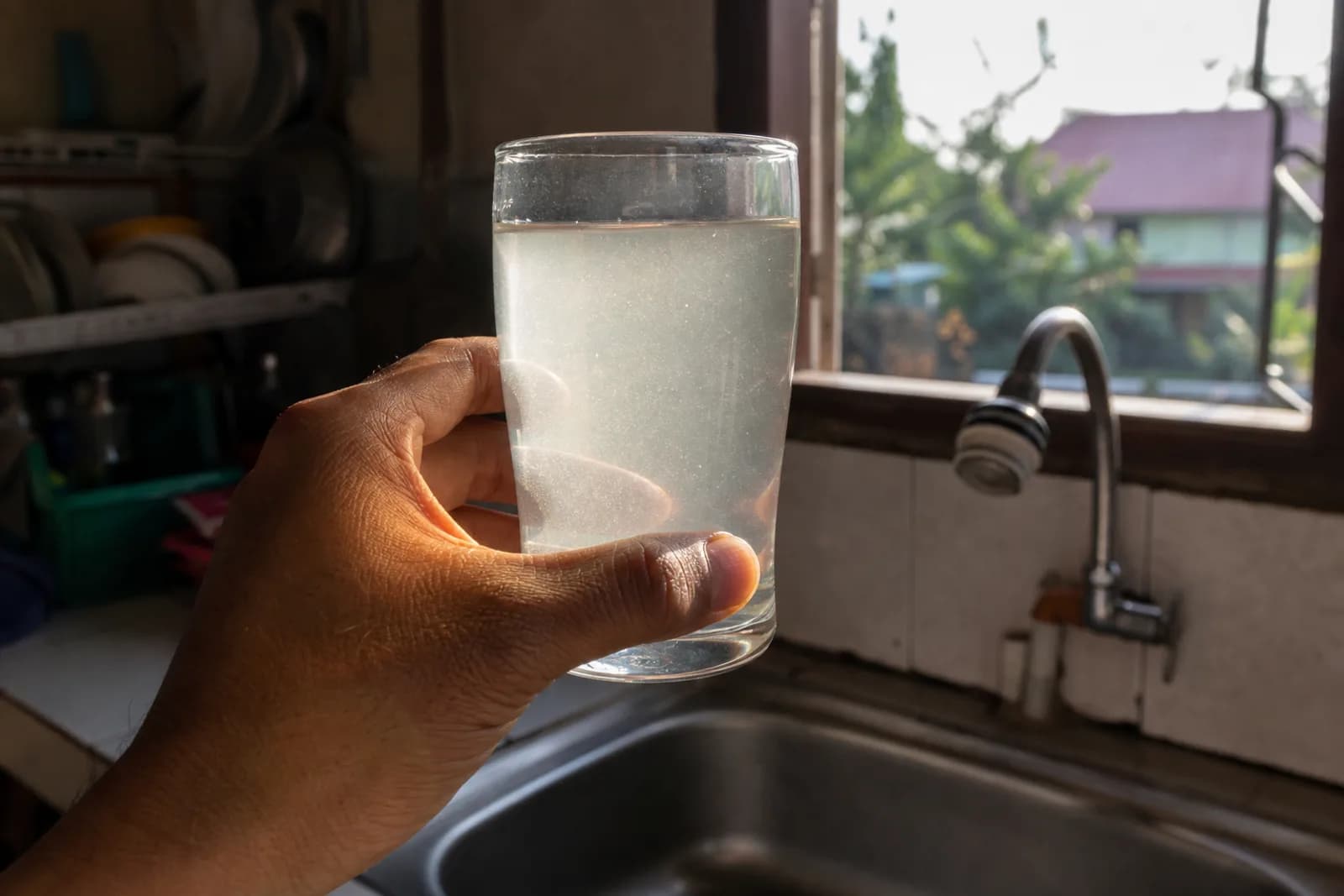
The risk that remains is post-distribution contamination: corroded pipes, shared building tanks with infrequent cleaning, or a pressure drop that allows backflow. Bacteria and sediment re-entering through the distribution network are the documented concern for many Jakarta households — not a dissolved-mineral load that requires RO to remove.
This distinction is what should drive your filter choice.
The core difference in one sentence
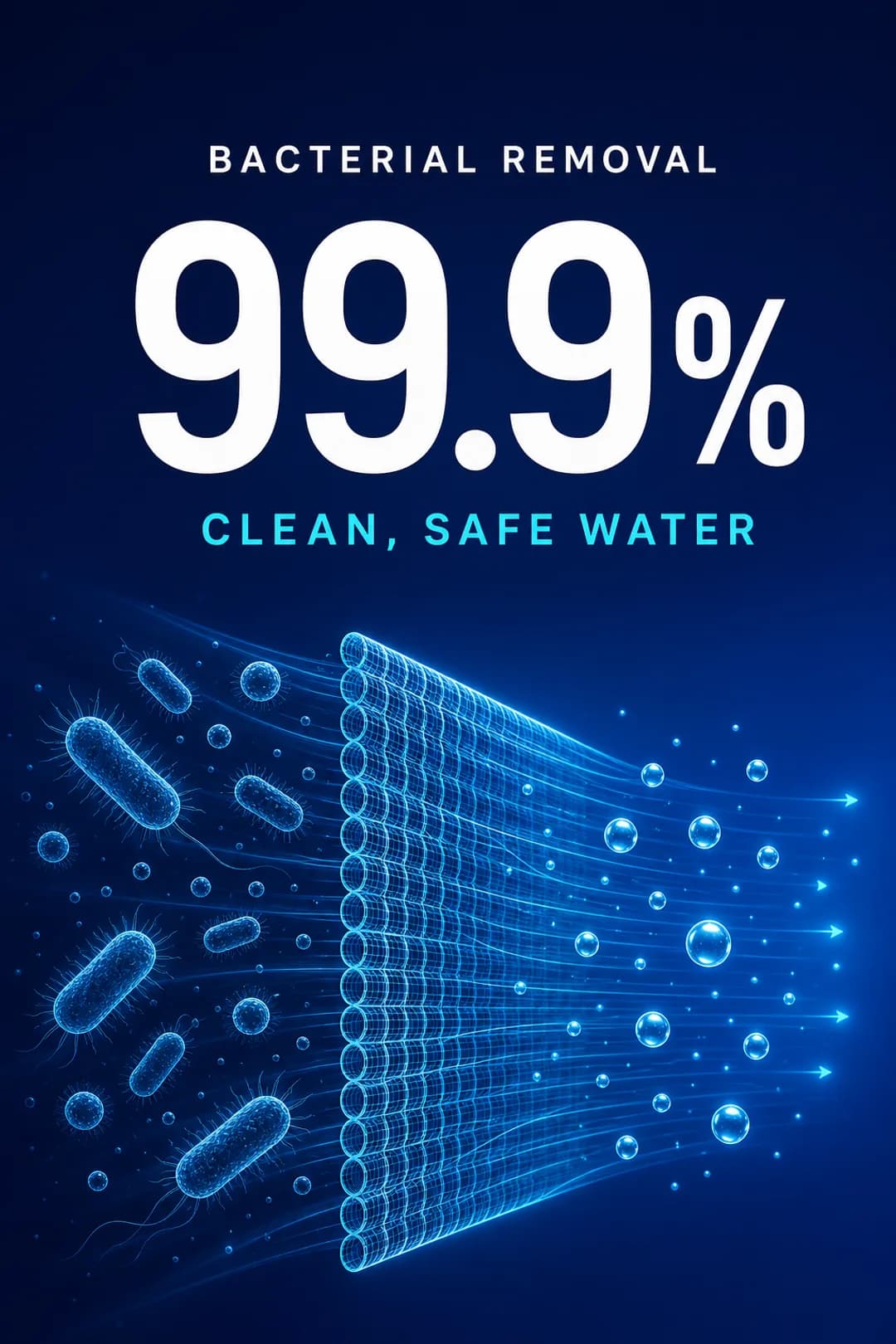
UF stops bacteria, protozoa, and particles. RO stops those and dissolved salts, heavy metals, and other dissolved contaminants too. The UF membrane pore is around 0.01 micron — fine enough to catch everything biological, too coarse to block dissolved ions. RO pores are roughly a hundred times tighter and block both.
If your PDAM supply has a low-to-moderate TDS and the threat is biological, UF is sufficient. If your source water has high TDS, brackish intrusion, or elevated heavy metals, only RO removes dissolved load.
The test you should run first: measure TDS
Before buying any filter, spend a few hundred Rupiah on a TDS meter — they are available at electronics markets throughout Jakarta. Take a reading directly from your tap.
- Below ~200 ppm: Typical clean PDAM supply. UF handles the biological risk; RO may be removing more than you need.
- 200–400 ppm: Mid-range. UF remains a reasonable choice for most households. If you notice a brackish taste or suspect heavy-metal sources, consider RO.
- Above ~400 ppm or clearly brackish taste: The dissolved load itself is a problem. RO is the appropriate choice — UF will not reduce TDS.
A single reading is useful; take readings over several weeks if your supply fluctuates. Jakarta's network TDS can shift seasonally, particularly in areas that draw from rivers with variable salinity.
For a full explanation of what TDS measures — and what it does not — see Understanding TDS in Drinking Water.
When UF is the right answer for PDAM households
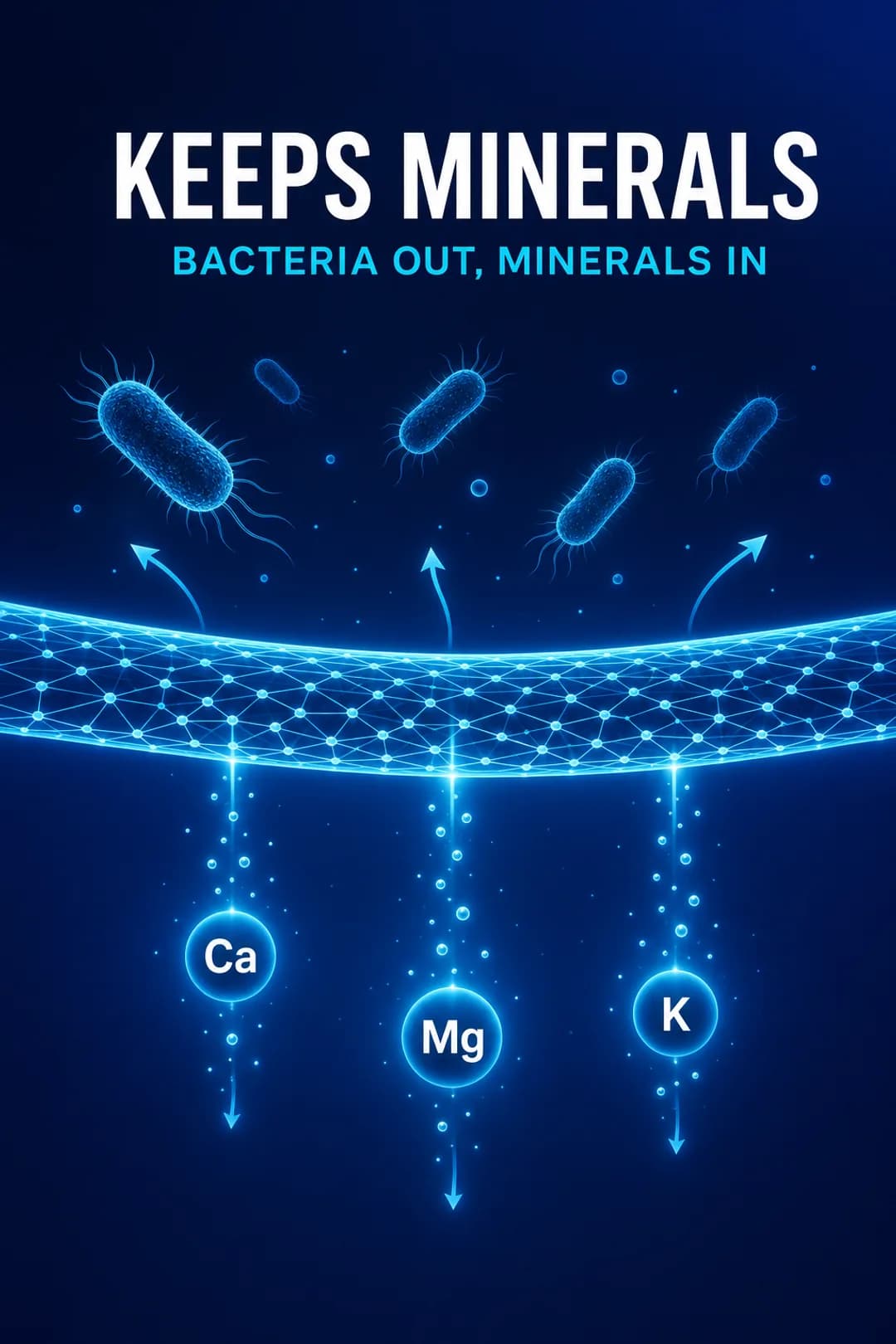
For a household on PDAM supply with TDS in a normal range, the primary concern is bacteria and sediment from distribution pipes. UF removes both at 99.9%, while leaving the water's natural calcium and magnesium untouched. There is no drain water and no electricity requirement — it runs on mains water pressure.
This is a practical advantage in Jakarta apartments and rented properties: no electrician, no plumber for a drain line, no change to your PLN consumption. The unit clips to your faucet or sits under the sink and runs as long as the tap is open.
The two UF options from Truliva:
CU3040 Counter-Top Ultrafiltration — a two-stage system (CTO carbon block + UF membrane) that clips to your faucet or sits on the counter. It removes 99.9% of bacteria, polishes chlorine taste, and delivers a steady 2 L/min. No power required. Cartridge life is 3,000 litres. At 240 × 90 × 385 mm, it occupies minimal counter space and requires no installation. This is the most accessible entry point for PDAM households wanting microbiological protection without complexity.
UU-N3010 Under-Sink Ultrafiltration — a four-stage system (PP pre-filter → CTO → UF → CTO post-polish) installed under the sink with a dedicated faucet. Four cartridges mean a more thorough treatment sequence: the PP stage captures larger particles and sediment first, protecting the UF membrane. Flow rate is 2.2 L/min. Capacity is 2,000 litres. Like the CU3040, it needs no drain connection and no electricity. It is the better choice if you want the UF option hidden under the sink with a cleaner kitchen setup, or if your supply carries heavier sediment loads that benefit from the PP pre-stage.
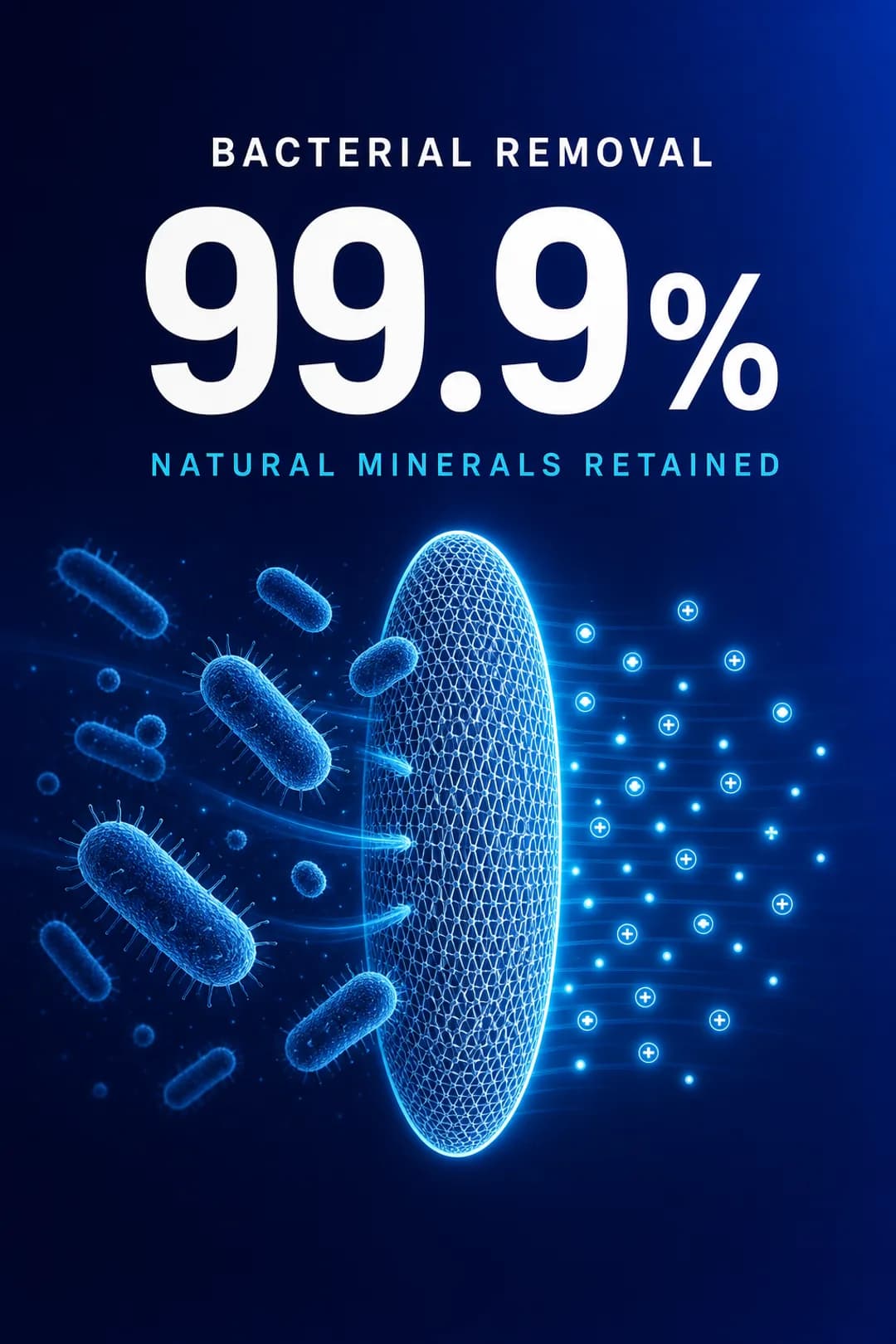
Both units keep minerals intact. Neither produces drain water. Neither draws power. For a straightforward PDAM piped supply, they address exactly the threat that matters.
When RO is the right answer
RO becomes necessary when the dissolved content of the water itself is the problem — not just what is carried in suspension.
Borehole or sumur artesis users: Groundwater in Jakarta and its surrounds is not treated at source. TDS readings from boreholes across the Greater Jakarta area vary enormously; values above 500 ppm are commonly reported in some districts as a rough indication, and coastal areas regularly show brackish results from saltwater intrusion pushing into shallow aquifers. Bacteria from surface infiltration are also a concern. UF will clear the biological threat but leave the dissolved mineral load, salt, and any heavy metals in the water. You need RO.
Coastal and North Jakarta households: The saltwater intrusion affecting North Jakarta's groundwater is well documented. If your water has a noticeable salty or brackish taste, your TDS meter will confirm it. Nothing short of RO addresses that.
High TDS PDAM supply: A small number of Jakarta districts draw from sources with consistently elevated TDS. If your tap reads above 400 ppm and tastes noticeably mineralised, RO makes sense even for piped supply.
The two RO options from Truliva for these situations:
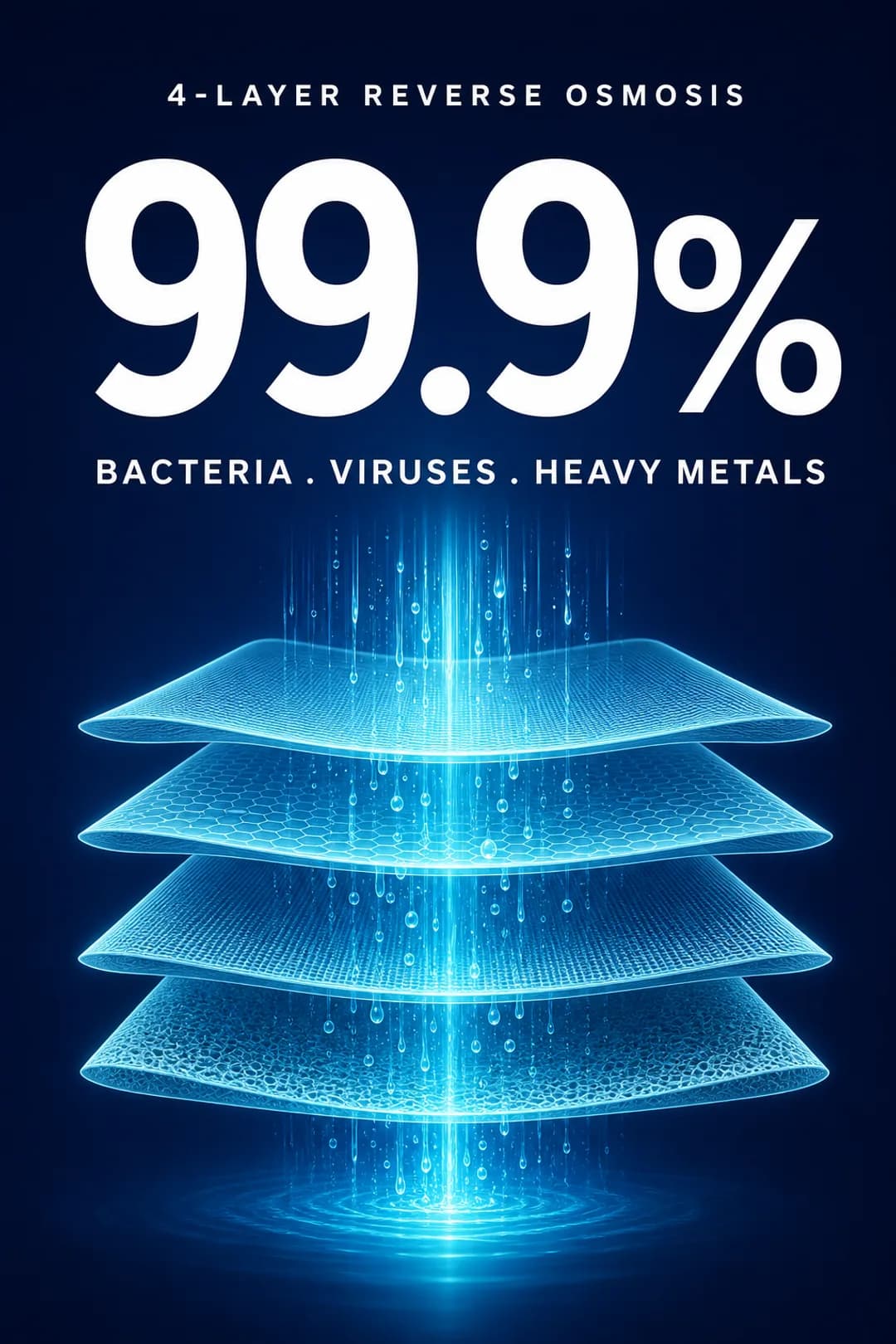
UR-Q3626 Under-Sink RO · Essential — a 4-layer RO at 1.5 L/min with 600 GPD output, removing 99.9% of bacteria, viruses, and heavy metals. It fits in a compact 405 × 105 × 365 mm footprint — 105 mm wide, which is notably slimmer than most under-sink RO systems. Total capacity is 4,000 litres. This is the practical first RO choice: straightforward installation, proven performance in a slim body, no hot-water or tank features, and a price point appropriate for households making their first move from galon refill to a purifier.
UR-S61096H Under-Sink RO · Instant Hot — the flagship, at 7-layer filtration, 99.9% removal of 104 substances, 2.66 L/min flow, 1,000 GPD output, and instant hot water in three seconds. Water efficiency is 80% — far less drain waste than conventional RO designs. The 8-year long-life membrane with anti-fouling flush reduces long-term maintenance cost significantly. At 440 × 145 × 420 mm it is still under-sink sized. This unit is appropriate when the water source is demanding (high TDS, borehole) and the household also wants a hot-water function at the faucet, or when a premium system with lower ongoing maintenance is the priority.
Decision logic by source
The choice resolves quickly once you have a TDS reading and know your source:
| Source | TDS | Recommended path |
|---|---|---|
| PDAM piped, low TDS | Below ~200 ppm | UF — CU3040 or UU-N3010 |
| PDAM piped, mid TDS | 200–400 ppm, no brackish taste | UF — UU-N3010 for 4-stage protection |
| PDAM piped, high TDS | Above ~400 ppm | RO — UR-Q3626 or UR-S61096H |
| Borehole / sumur artesis | Typically variable, often high | RO — UR-Q3626 or UR-S61096H |
| Coastal / North Jakarta | Brackish or salty taste | RO — UR-Q3626 or UR-S61096H |
The table above uses TDS and source type as the primary filter, which is the correct approach. UF is not a compromise for clean PDAM water — it is the appropriate technology. RO is not an upgrade for the sake of it — it is the necessary choice when the dissolved load is the problem.
Practical notes for Jakarta households
Galon refill users considering a switch: Air galon from a reputable DAMIU depot is generally treated, but quality and treatment standards vary by outlet, and the 19-litre containers are a recurring cost. A UF unit for PDAM supply eliminates the galon entirely for drinking and cooking water at a fraction of the ongoing cost. For more on this calculation, see Cost of Galon Delivery vs a Purifier.
Apartment and kost renters: UF units need no plumber and no drain connection. The CU3040 clips to the existing tap and stores on the counter. If you cannot modify the sink, this removes the barrier entirely. RO requires a drain line — check your sink cabinet before ordering.
Seasonal fluctuations: Jakarta's source rivers see higher turbidity in the wet season and can see TDS shifts in prolonged dry periods when river flow drops and salinity edges up from the coast. A periodic TDS check — monthly during the transition seasons — gives you early warning of any meaningful change.
The bottom line
For most Jakarta households drawing from PDAM piped supply, bacteria and sediment from distribution pipes are the documented threat. A UF system removes both while keeping minerals, using no power, and producing no drain water. Measure your TDS first. If the number is in a normal range and the water has no brackish taste, the CU3040 or UU-N3010 addresses what your water actually needs.
If the reading is high, the source is a borehole, or the taste is brackish, only RO removes the dissolved load. The UR-Q3626 is the practical starting point; the UR-S61096H is the right choice when the source is demanding or when instant hot water and a long-life membrane are priorities.
The full science behind the membrane difference is in RO vs UF: Which Filtration Is Right for You. If you want to understand what your tap TDS reading does and does not tell you, Understanding TDS in Drinking Water covers the details.
For context on what Jakarta's piped supply contains and where the risks actually sit, see Is Jakarta Tap Water Safe to Drink.
Not sure which system fits your water?
Aright Marketing Indonesia can assess your supply and recommend the right Truliva system for your home or business in Indonesia.