How the Wet Season Changes Your Water Quality
Heavy rain and flooding alter tap water and well water in ways that are easy to miss. Here is what musim hujan does to PDAM supply and shallow wells — and what to do about it.
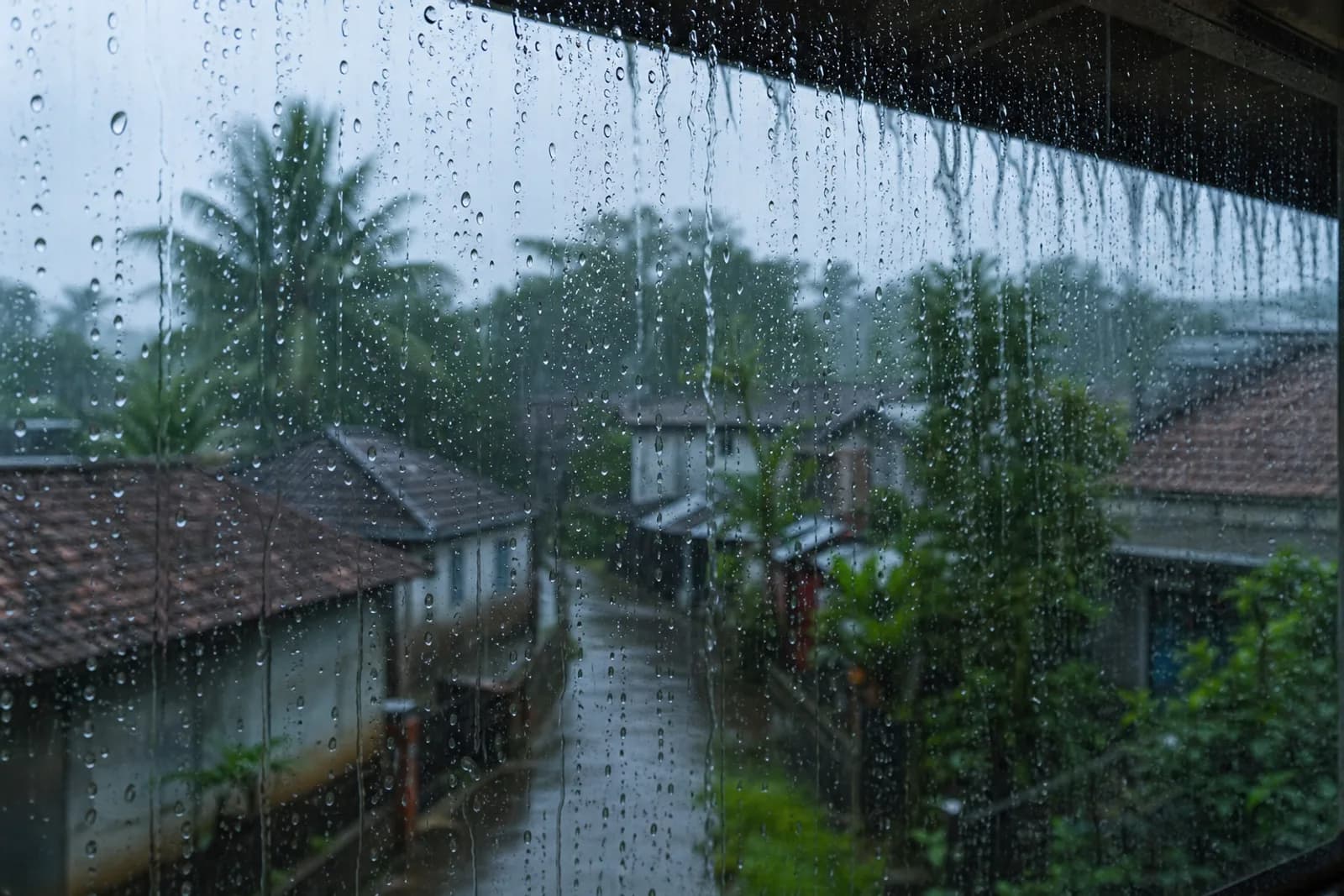
The rain that fills Indonesia's rivers and floods its streets also changes what comes out of your tap and your well. The same downpour that replenishes a reservoir stirs up sediment, carries surface contamination into groundwater, and pushes treatment plants harder than they work for the rest of the year. Knowing what changes, and when, lets you respond before a water quality problem becomes a health problem.
What heavy rainfall does to PDAM supply
Municipal water in Indonesia is drawn from surface sources — rivers, reservoirs, and lakes — that connect directly to the watershed above them. In the early weeks of the wet season, and again during any prolonged downpour, runoff sweeps topsoil, organic debris, and surface contaminants into those catchments. River turbidity climbs sharply. Water that ran clear through the dry season can turn brown or grey within hours of a major storm.
Treatment plants respond by raising coagulant and chlorine doses to handle the elevated load. The water reaching your tap may then carry a stronger chlorine taste and smell than usual — not a sign that something has gone wrong, but a sign that the plant is working harder. What it cannot always guarantee is that every particle has been fully settled and filtered when demand is high and the raw-water quality keeps shifting.
The other wet-season vulnerability in piped supply is pressure. Flooding and storm damage to distribution infrastructure is common in low-lying urban areas — parts of Jakarta, Semarang, and Surabaya see it regularly. When a pipe segment is damaged or a pump station loses power, pressure in the network drops. Low-pressure zones then draw groundwater and soil in through micro-cracks in ageing pipes, so water that was clean at the plant can pick up contamination on the way to your tap. Supply interruptions lasting several days after a serious flood are not unusual.
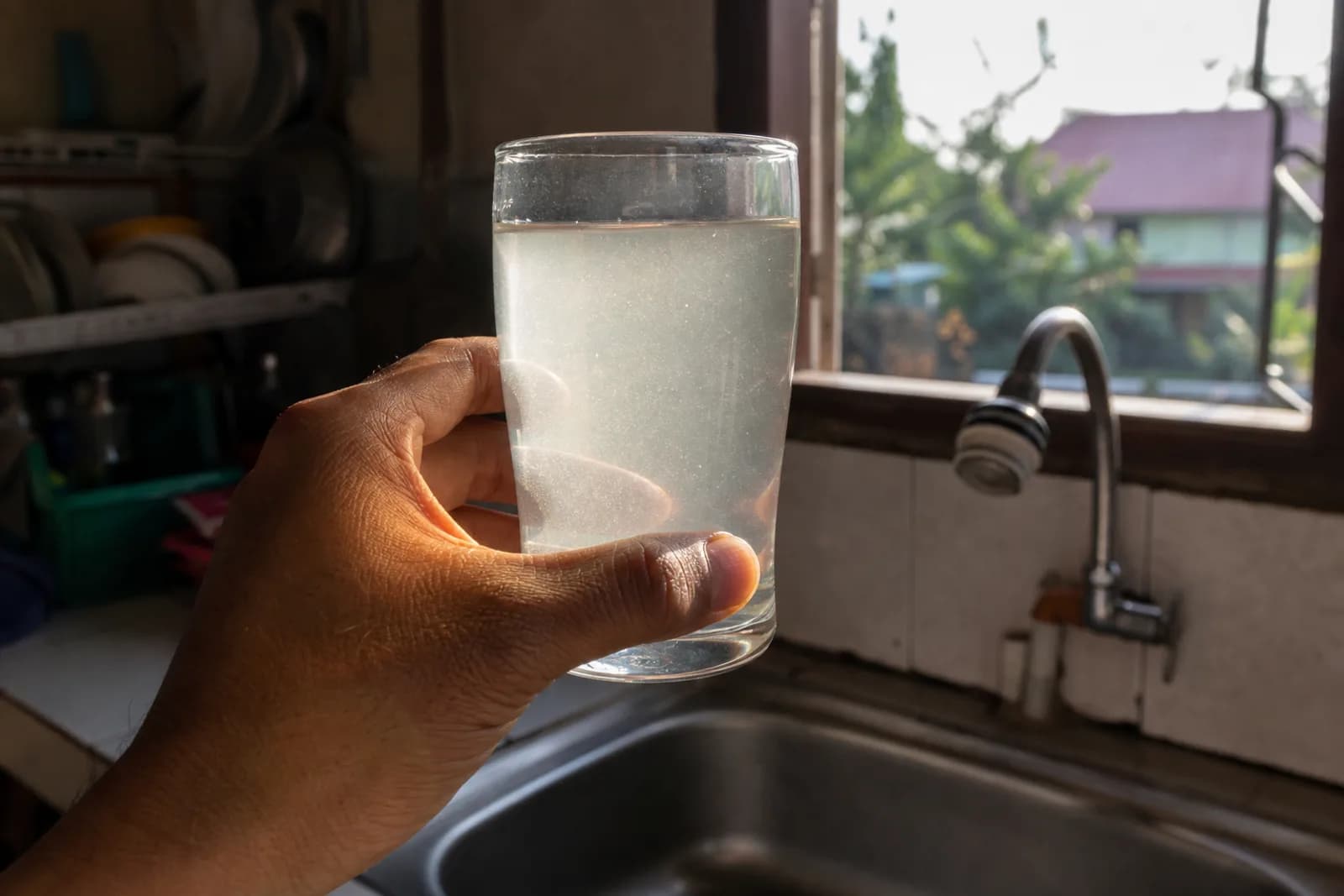
Watch the first draw from your tap after a storm, or after supply has been out. Cloudy or discoloured water is a direct sign that the distribution network has been disturbed. Run the tap until it clears. If the cloudiness persists, do not use that water for drinking or cooking until it has passed through a filter.
Shallow wells carry the biggest wet-season risk
For households on groundwater — whether a shallow hand-dug well (sumur gali) or a shallow borehole (sumur bor dangkal, typically under 15–20 metres) — the wet season introduces a contamination pathway that does not exist in the dry months: direct surface ingress.
Floodwater is not just water. It carries whatever was on the ground surface — animal waste, septic overflow, agricultural runoff, household rubbish, fuel from vehicles. When it surrounds or inundates a well, it can enter through the casing, through cracks in the cover, or by saturating the surrounding soil until contaminated surface water travels sideways into the shallow aquifer. A well that produces clean water all through the dry season can fail a basic coliform test within days of a flood.
The difficulty is that this contamination is invisible. A flooded well that has drained and looks normal is not necessarily safe. Bacterial contamination — E. coli among others — leaves no colour, no smell, and no taste at the concentrations typically found in a contaminated domestic well. Households that draw well water through the wet season without adjusting their treatment are taking a risk they cannot see.
So state it plainly: if your well was flooded or surrounded by floodwater this season, assume it is contaminated until you have reason to believe otherwise. Do not rely on appearance alone.
Turbidity spikes: what the cloudiness actually means
Turbidity — the cloudiness caused by suspended particles — is the most visible wet-season change in water quality. Brown or milky tap water after a storm is mostly sediment: fine silt, clay, and organic particles that the treatment or distribution system did not fully remove. In well water after flooding, that cloudiness can also include microbial material.
Sediment is not always the primary health hazard, but it matters for two reasons. First, fine particles can carry bacteria and viruses adsorbed onto their surfaces, shielding them from UV disinfection and reducing the contact efficiency of chlorine. Second, turbid water reaches downstream appliances and filter cartridges carrying an abrasive, fouling load they were never sized to handle continuously. A cartridge that normally lasts six months can be exhausted in weeks at the peak of musim hujan if no pre-filter stands in front of it.
A sediment pre-filter at the point of entry — upstream of any carbon or RO stage — is the correct first response to wet-season turbidity. It takes the particle load so the finer downstream stages are not fouled before their time. Without it, the wet season is paid for in replacement cartridges and shortened equipment life.
Waterborne illness and the seasonal pattern
Acute gastroenteritis — diarrhoea and vomiting attributed to waterborne pathogens — is commonly reported to rise during and immediately after the wet season in Indonesia. The link to water quality is well established in public health literature, even where local data is patchy. Flooding concentrates faecal contamination in ground-level water sources, and supply cuts push households toward unfiltered alternatives.
The pathogens most often associated with flood-related contamination include bacteria such as E. coli and Salmonella, enteric viruses, and in some areas Giardia and Cryptosporidium. Boiling kills bacteria and viruses reliably, but it does nothing for sediment, dissolved chlorine, or the chemical runoff that can come with flooding — and it relies on someone remembering to do it every time. A complete treatment train — sediment pre-filtration followed by reverse osmosis or ultrafiltration — is a broader barrier and runs without that reminder.
After a flood: what to do with your well
If your shallow well was flooded, or if floodwater came within a metre or two of the casing, treat it as contaminated until tested. Recovering a flooded well takes three steps.
Flush first. Pump or draw the well down as completely as you can and discard the water. This removes the immediate surface contamination and lets fresh aquifer water flow in. In practice that means pumping for several hours, not running the tap for ten minutes.
Disinfect. Shock chlorination — adding a measured dose of unscented household bleach, letting it contact the water and casing for several hours, then flushing again — is the standard method for disinfecting a well after flooding. The correct dose depends on well diameter and water volume. Your local Puskesmas can advise on quantities, and Kementerian Kesehatan publishes guidance on this; follow those figures rather than guessing.
Test before trusting. A basic coliform test at a provincial health laboratory or Puskesmas confirms whether the biological load has cleared. Do not skip this step. Flushing and disinfecting reduce the risk substantially, but only a test tells you the water is actually safe — and the test costs little against the cost of a waterborne illness.
Until the well passes a test, treat all water from it as you would treat untreated groundwater: filter and then disinfect before drinking or cooking.
Managing supply interruptions
PDAM supply cuts during the wet season are predictable enough to prepare for. The most practical preparation is a reserve of filtered drinking water — enough for drinking and cooking for two to three days. A household that has stored treated water is not forced into a bad decision when the supply goes out.
If you use an under-sink RO or a countertop filter, the storage tank or carafe is that reserve. Fill it when supply is stable, not when the storm is approaching. Some households in flood-prone areas keep a larger reserve in a clean food-grade tank for the same reason.
During a cut, do not assume that water from any alternative source is safe to drink untreated. Rainwater off a roof carries contamination from the roof and gutters. A neighbour's well may carry the same flood risk as your own.
A seasonal filter check is worth doing
The wet season is a good prompt to inspect whatever treatment you have in place. Check that pre-filter cartridges are not overloaded — a drop in pressure or flow rate is an early sign. If you have been putting off a filter replacement, the start of musim hujan is the wrong time to keep putting it off: an RO or UF membrane working behind a fouled pre-filter is left handling a load it was never meant to take alone.
A whole-home pre-filter with automatic flushing handles wet-season sediment spikes without manual intervention — the flush cycle runs on a timer, whether or not anyone remembers to open a valve. For households on well water, pairing a pre-filter at the pump outlet with an under-sink RO at the kitchen tap covers both the particle load and the microbiological risk the wet season raises. Truliva builds its pre-filters around this automatic-flush design.
The bottom line
Musim hujan changes the baseline. PDAM supply arrives cloudier, more heavily chlorinated, and more prone to interruption. Shallow wells face a genuine contamination risk from floodwater even when they look and smell normal. Both problems are manageable with the right filtration and a little preparation — but neither manages itself on the dry-season routine. Watch the first draw after any storm, check your filter stages before the season begins, and if your well was flooded, flush, disinfect, and test before you trust it again.
Not sure which system fits your water?
Aright Marketing Indonesia can assess your supply and recommend the right Truliva system for your home or business in Indonesia.