Nitrates in Groundwater: Why Boiling Makes It Worse
Nitrate is colourless, odourless, and tasteless — you cannot detect it without a test. Learn where it comes from, why boiling concentrates it, and which treatment methods actually remove it from drinking water.
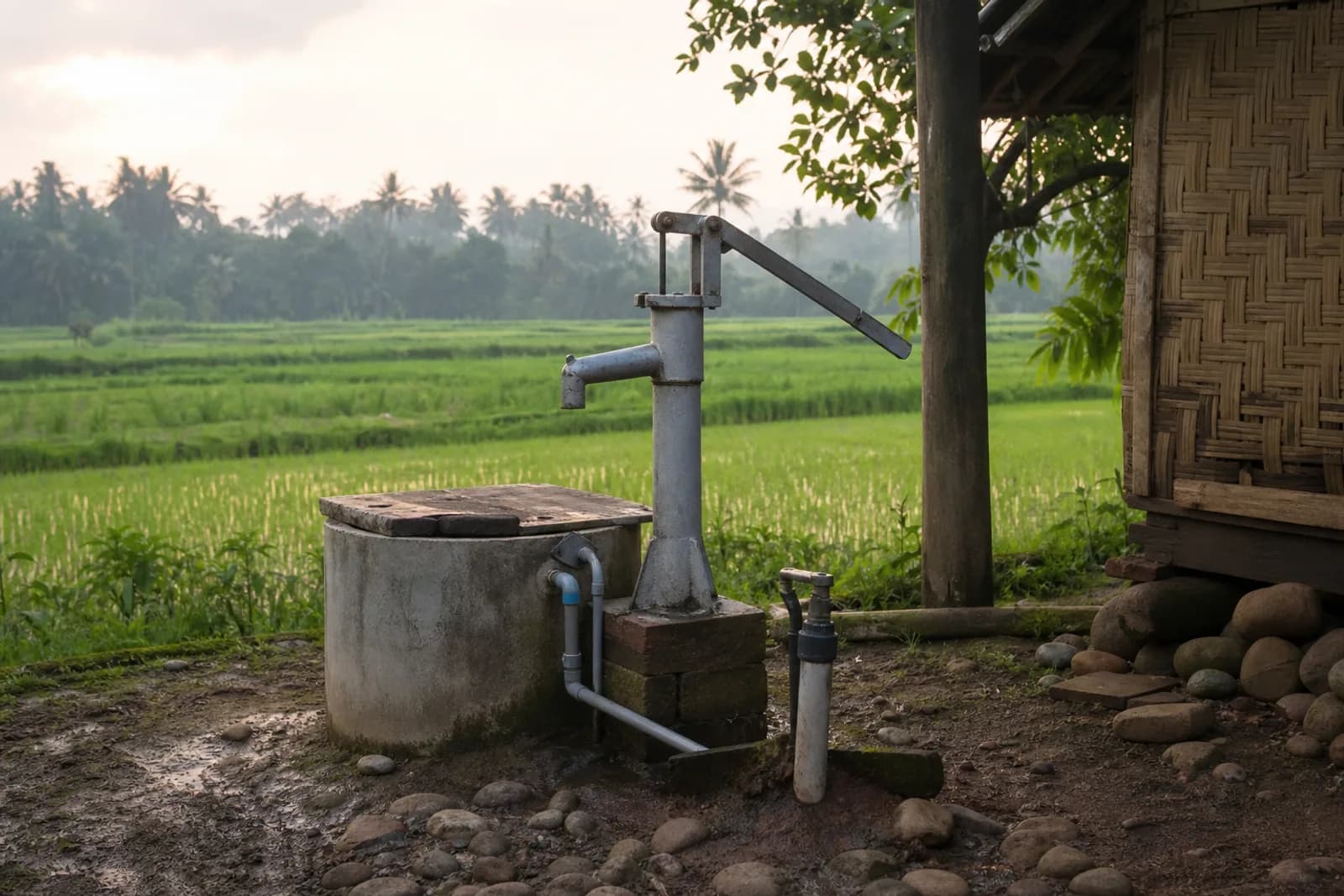
Nitrate is one of the few drinking-water contaminants that boiling makes more dangerous, not less. You cannot smell it, see it, or taste it at the concentrations that matter for health. A shallow well in an agricultural area or a crowded neighbourhood can carry nitrate well above the recommended limit while the water looks perfectly clear. Invisible, concentrated by heat, and common in exactly the settings where many Indonesian households draw their water — that combination is worth understanding precisely.
What nitrate is and where it comes from
Nitrate (NO₃⁻) is an inorganic compound formed when nitrogen oxidises in soil and water. Small amounts occur naturally in groundwater as part of the nitrogen cycle. Elevated concentrations are almost always a sign of external nitrogen loading from human or agricultural activity.
The main sources are well understood:
Agricultural fertiliser runoff. Synthetic nitrogen fertilisers applied to rice paddies, vegetable fields, and plantations are water-soluble. Rainfall carries dissolved nitrate through the topsoil into the water table. This is the dominant source in agricultural areas across Java, Sumatra, and other intensively farmed regions.
Livestock waste. Animal urine and faeces contain urea and organic nitrogen compounds. These break down to nitrate in soil, particularly around livestock operations without adequate waste containment. High animal density within catchment distance of a well is a consistent risk factor.
Leaking septic tanks and open sanitation. Human waste contains significant nitrogen. A properly functioning septic tank set well back from a well poses limited risk. But in dense kampung neighbourhoods where septic infrastructure is old, shallow, or absent, human waste becomes a documented and serious source. Geology matters too: sandy or coarse soils let dissolved nitrate move downward faster than clay-rich soil, which gives natural attenuation more time to work.
Combined contamination. Shallow wells in peri-urban neighbourhoods often face pressure from several directions at once: neighbours' septic tanks, small-scale livestock, and nearby farming. The cumulative load can be substantial even when no single source looks severe.
Once nitrate reaches the water table it is stable. Unlike many biological contaminants, it does not break down on its own over short periods. What goes in tends to stay in, at least on the timescale of a household's use of that well.
Why you cannot detect it without testing
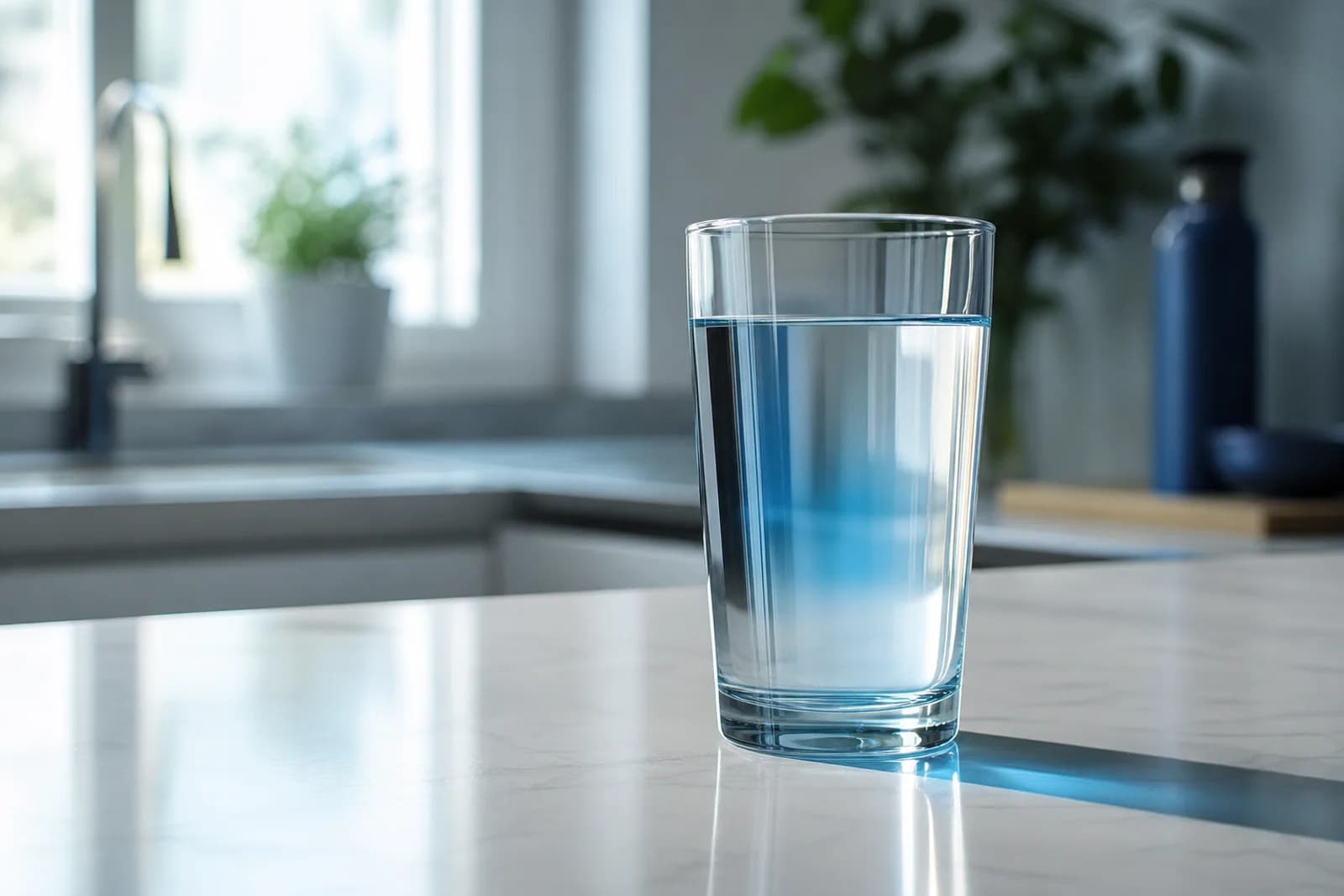
Nitrate at concentrations relevant to health produces no change in the appearance, smell, or taste of water. A glass drawn from a well with 80 mg/L nitrate — twice the WHO guideline value of 50 mg/L for nitrate as NO₃⁻ — is visually indistinguishable from clean water.
This matters because most household checks of well water are sensory. People look at whether the water is clear, smells normal, and tastes clean. Those checks catch turbidity, iron staining, hydrogen sulphide, and heavy biological contamination. They catch nothing for nitrate.
The only way to know the nitrate level in a well is to test it — laboratory analysis or a field test kit calibrated for nitrate. Where the sources listed above are present, testing is the right first step, not an assumption that clear water is safe water.
The well-documented health concern: infants and pregnant women
At elevated concentrations, nitrate can interfere with the oxygen-carrying capacity of blood. In the digestive system, nitrate is converted to nitrite, and nitrite then reacts with haemoglobin to form methaemoglobin — a form that cannot transport oxygen effectively. This condition is called methaemoglobinaemia.
Adults and older children reduce methaemoglobin back to functional haemoglobin efficiently. Infants under six months do not. Their foetal haemoglobin is more easily oxidised, the enzyme system that reverses the conversion is not yet mature, and their stomach acid is not concentrated enough to suppress the gut bacteria that drive the nitrate-to-nitrite conversion.
In severe cases the result is a visibly blue or grey skin tone as tissues are starved of oxygen — hence the common name "blue baby syndrome." This is a recognised medical condition, though it is also uncommon. The WHO guideline value of 50 mg/L nitrate as NO₃⁻ (equivalent to 11.3 mg/L as nitrate-nitrogen) is set with infant protection specifically in mind.
It is worth being precise about who is at risk. The concern is primarily acute, and it centres on bottle-fed infants — those whose formula is mixed with well water at or above harmful nitrate levels. Breastfed infants whose mothers have normal nitrate intake face much lower direct exposure. Pregnant women are also treated as a sensitive group. For a household with a bottle-fed infant drawing on shallow groundwater in a high-risk area, this is a concrete reason to test and act, not a hypothetical one.
Why boiling does not help — and concentrates the problem
This is the point that catches many households off guard. Boiling is a sound response to biological contamination: high heat reliably kills pathogens. For nitrate it does the opposite.
Nitrate is a dissolved inorganic compound. Boiling does not break it down. What boiling does is drive off water as vapour while the nitrate stays behind in the liquid. Boil a litre down to 800 millilitres and the nitrate concentration rises by about 25 percent. Boil it down further and the concentration climbs further still.
So a household that boils water in an uncovered pot at a rolling boil for a long time — or that deliberately boils water down before drinking — is raising the effective nitrate dose, not lowering it. This is not a minor technical footnote. In a high-nitrate situation, the most intuitive home treatment makes the problem worse.
Air galon refill water and sealed bottled water are usually made from source water that has been treated, often by reverse osmosis, and may be lower in nitrate. But that depends entirely on the supplier's source and process. Without knowing both, there is no guarantee.
What actually removes nitrate
Two treatment technologies are well established for removing nitrate from drinking water. Standard carbon block and sediment filters are not among them — they are built for different contaminants and should not be assumed to touch dissolved inorganic ions.
Reverse osmosis. An RO membrane with a rated pore size around 0.0001 microns rejects dissolved ions, nitrate included. Reported rejection rates for nitrate on a well-maintained RO system typically fall in the 85–95% range, which brings most realistic high-nitrate feeds well within safe limits. RO is the most practical household-scale option for nitrate, and it handles a range of other dissolved contaminants at the same time — TDS, heavy metals, and most bacteria. The pre-filter stages must be serviced on schedule to keep the membrane working: a worn carbon block will not affect nitrate rejection directly, but sediment breakthrough can foul the membrane over time.
Ion exchange (anion exchange). Nitrate-selective anion exchange resins swap nitrate ions for chloride ions as water passes through the resin bed. This is an effective, established treatment, widely used in point-of-use and point-of-entry systems across agricultural regions of Europe and North America. The resins eventually exhaust and need regeneration or replacement. In Indonesia it is less common in household formats than RO, though it appears in some commercial and semi-industrial water treatment.
A note on distillation: like RO, it removes nitrate effectively, because nitrate does not vaporise with the water. But household distillers are uncommon in Indonesia, and their energy cost and slow output make them impractical for most families. RO remains the standard household recommendation.
The Indonesian context: shallow wells in high-risk settings
Indonesia's nitrate risk maps fairly predictably onto its land use and sanitation. The highest-risk settings share a few traits: shallow sumur bor (bored wells), often less than 15 metres deep; proximity to farmland or high livestock density; and septic infrastructure that is old, shallow, or absent.
Densely built kampung neighbourhoods in cities such as Jakarta, Surabaya, and Bandung — where homes sit close together and septic tanks and wells coexist at short distances — are a recognised environment for several kinds of groundwater contamination, nitrate among them. The picture is not uniform: some urban groundwater is relatively clean, some rural groundwater is heavily contaminated. The safe default is to treat any shallow well as needing a test rather than assume it is clean.
PDAM piped supply in Indonesian cities is treated and does not usually carry elevated nitrate, so PDAM households generally face a lower nitrate risk than those on groundwater — though PDAM quality and consistency vary considerably by city and district.
For a household that relies on a sumur bor for cooking and drinking, or that tops up piped supply with well water, nitrate belongs on a short list of contaminants worth testing for specifically, alongside E. coli and iron.
The bottom line
Nitrate in shallow groundwater is a concrete, well-documented risk in agricultural and densely populated parts of Indonesia, not a hypothetical one. It gives no sensory warning. Boiling — the most common home water treatment — does not reduce nitrate, and concentrates it if the water volume drops in the process. The highest-risk group is bottle-fed infants, for whom exposure above the guideline carries a recognised acute health risk.
If your household draws on a shallow well — especially near agriculture, livestock, or dense septic infrastructure — testing for nitrate is the right first step. If levels come back high, reverse osmosis at the point of use is the most practical and widely available treatment. Carbon block and sediment filters do not address dissolved nitrate, and understanding that distinction matters before you decide how to respond.
Not sure which system fits your water?
Aright Marketing Indonesia can assess your supply and recommend the right Truliva system for your home or business in Indonesia.