Does the pH of Drinking Water Actually Matter?
pH measures whether water is acidic or alkaline, but it is not the primary indicator of drinking-water safety or quality. This article explains what pH does and does not tell you — and why the alkaline-water marketing claims deserve scepticism.
pH measures a single thing: whether a solution is acidic, neutral, or alkaline. For drinking water, it is a useful quality parameter, but it is not the primary indicator of safety. It says nothing about heavy metals, microorganisms, or dissolved chemicals. Understanding what it measures — and what it does not — makes it far easier to judge the marketing around alkaline water and to interpret readings from the inexpensive pH meters now sold in hardware shops across Indonesia.
What pH actually measures
The pH scale runs from 0 to 14. A value of 7 is neutral. Below 7 is acidic; above 7 is alkaline (also called basic). Each step on the scale represents a tenfold change in hydrogen ion concentration, so a solution at pH 5 is ten times more acidic than one at pH 6, and one hundred times more acidic than one at pH 7.
Pure water in equilibrium is pH 7 by definition. Real water is rarely pure in that sense. Dissolved minerals, organic acids from soil, dissolved carbon dioxide from the atmosphere, and the treatment chemicals used in municipal supply all shift the pH in one direction or the other. Most natural fresh water sits somewhere between pH 6 and pH 8.5 — neither extreme, and usually far from any level that would affect the drinker.
What range is considered safe for drinking
The World Health Organization's guidelines for drinking-water quality note that pH is not a direct health parameter for drinking water at typical concentrations, but that values between 6.5 and 8.5 are the commonly accepted operational target for treated municipal supply. This range is used primarily because water outside it tends to cause infrastructure and taste problems, not because water at pH 6.2 or 8.8 is acutely dangerous to drink.
Taste perception does correlate with pH to some degree. Water below pH 6 can taste noticeably sour. Water above pH 9 tends to taste bitter or soapy. In the 6.5–8.5 band that most treated supplies aim for, pH is rarely the thing a drinker notices.
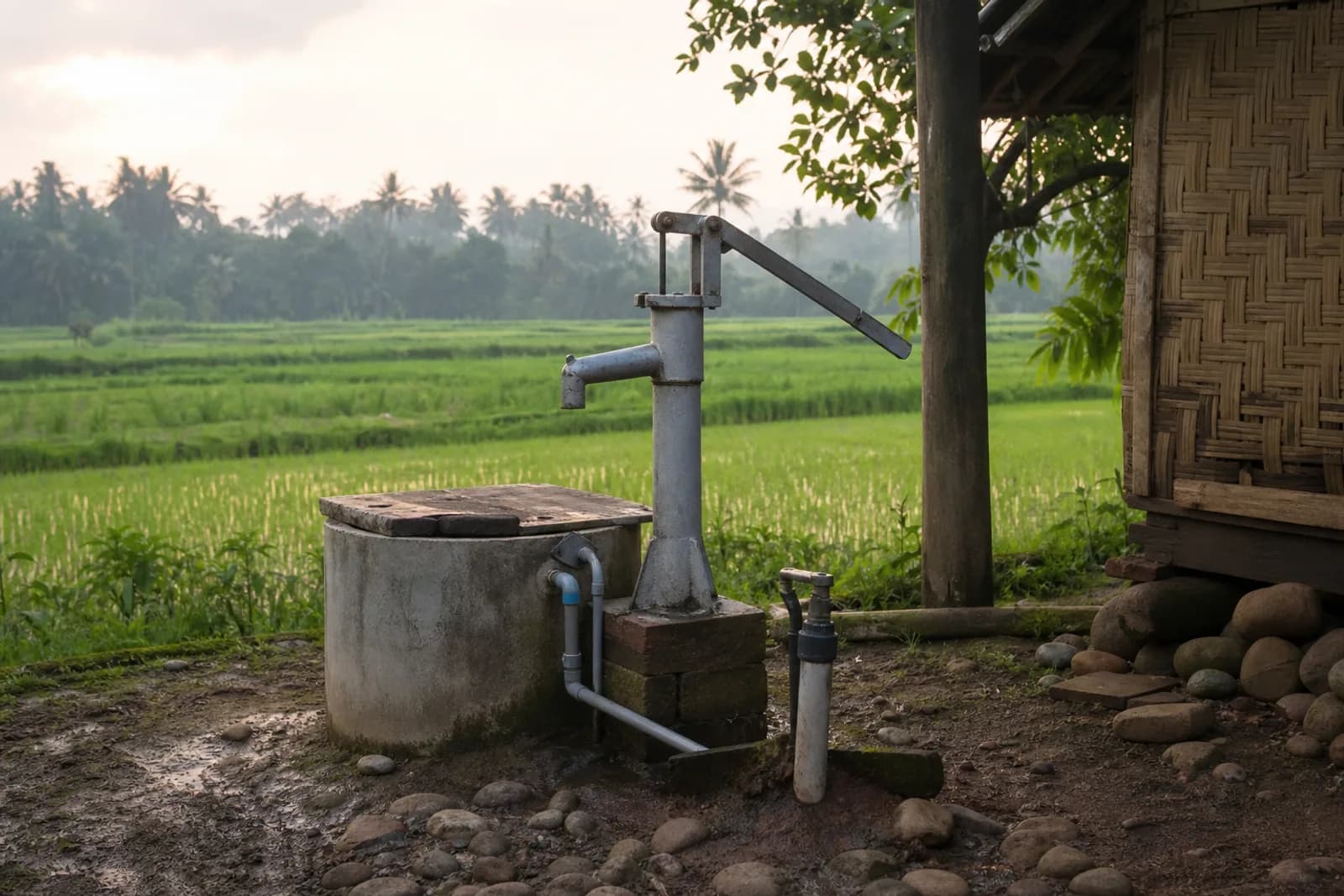
PDAM (Perusahaan Daerah Air Minum) water in Indonesian cities is generally treated to fall within this range, though the figure at your tap depends on the source water, treatment plant conditions, and how far the water has travelled through the distribution network. Borehole water (sumur bor) is more variable: volcanic soils in parts of Java and Sumatra can produce groundwater that is naturally slightly acidic, while coastal areas with shallow aquifers may trend higher. An inexpensive combination pH/TDS meter — widely sold at electronics and aquarium supply shops — gives a useful ballpark reading at your own tap, though accuracy varies and calibration matters for a reliable result.
The alkaline water marketing claims
Over the past decade, a substantial industry has grown around "alkaline water" — typically water with a pH of 8 to 10, produced either by adding alkaline minerals or by electrolysis (marketed as "ionised water"). The health claims made for it range from improved hydration and antioxidant properties to cancer prevention and slowing of ageing.
The honest position is that the evidence is limited and contested. A few small studies have suggested possible benefits in narrow contexts — competitive athletes rehydrating after intense exercise, or short-term effects on blood lactate. But these findings have not been replicated consistently, are not backed by large controlled trials, and do not translate into general health recommendations for ordinary daily drinking. Major health regulators in most countries have not endorsed alkaline water as a therapeutic product.
The body maintains blood pH in a very tight range (roughly 7.35 to 7.45) through tightly regulated physiological processes involving the lungs and kidneys. The stomach is highly acidic (typically pH 1.5 to 3.5) and will neutralise the pH of any water you drink long before it reaches the bloodstream. The argument that drinking alkaline water meaningfully shifts your body's pH is physiologically difficult to sustain for a healthy person. This does not mean alkaline water is harmful — for most healthy adults, drinking water at pH 8 or 9 is simply water. It means the claimed mechanism does not hold up well under scrutiny.
If you have specific health conditions, particularly those affecting kidney function or acid-base balance, this is a conversation to have with a physician rather than a water equipment supplier.
Why RO-purified water reads slightly acidic
Reverse osmosis membranes remove the vast majority of dissolved solids from water — including the calcium, magnesium, and bicarbonate ions that in natural water act as a pH buffer. Strip those out, and the water's pH is largely left to dissolved carbon dioxide. Water in contact with air absorbs CO₂, which reacts with water to form carbonic acid. Because RO permeate has almost no mineral buffer to resist that acidification, it typically reads somewhere between pH 5.5 and 6.5 — sometimes lower, depending on CO₂ levels and how long the water has been stored.
This is not contamination. The water is not "acidic" in the way that vinegar or battery acid is acidic. The absolute concentration of hydrogen ions at pH 5.5 to 6 is extremely low — the slight acidity simply reflects the absence of buffering minerals. The scientific consensus is that this level poses no health risk to healthy adults.
That said, the taste can be affected. Demineralised water is often described as flat or slightly sharp. Low mineral content also means it lacks the subtle flavour contribution that calcium and magnesium provide — the quality commonly described as "fresh" in well-regarded spring or filtered water.
Remineralisation: raising pH and improving taste
Adding a remineralisation stage after the RO membrane addresses both the pH and the taste issue simultaneously. A remineralisation cartridge typically contains a calcite or mixed calcite-magnesite media; as the water passes through, it dissolves small amounts of calcium and magnesium carbonate, raising pH toward the 7–8 range and adding a modest mineral content.
The improvement to taste is genuine and commonly reported by users who compare RO-only output against remineralised output side by side. The mineral addition also restores some of the buffering capacity the RO process removed, so the pH stays more stable and does not drift downward in storage.
Remineralisation does not add meaningful nutritional quantities of calcium or magnesium — the dosing is modest, and dietary intake from food remains the dominant source of both minerals. The benefit is practical: better-tasting water and a pH in the range most people expect from good drinking water.
Pipe corrosion: a practical concern at very low pH
Very low pH water — below 6.5, and particularly below 6.0 — is aggressive toward metal plumbing. Acidic water dissolves copper from copper pipes and fittings over time, leaching copper into the drinking water and gradually degrading the plumbing. It can also leach lead from older lead-jointed pipes and solder, which is a genuine health concern. This is why water utilities manage pH upward before distribution, and why distribution infrastructure is a more significant pipe-corrosion risk when pH is low.
For home plumbing, the practical implication is that untreated borehole water with a naturally low pH (below 6.5) running through copper pipework over years will show progressive corrosion. In Indonesia, copper plumbing is common in newer urban construction. If you are on borehole supply and your water consistently reads below 6.5, it is worth checking whether your pipes show any green-blue staining at fittings — an indicator of copper dissolution.
RO permeate at pH 5.5 to 6 is typically consumed directly or stored in a sealed tank rather than circulated through the home's plumbing network, so the corrosion concern is less directly applicable to point-of-use RO systems. The corrosion concern applies more to whole-home or borehole supply entering the main distribution within the building.
The bottom line
pH is a real water quality parameter worth understanding, but it does not operate independently of everything else. Water at pH 6.5 that carries heavy metals or pathogenic bacteria is not "good" water. Water at pH 8.5 that is clean and well mineralised is good water. The number alone tells you something about acidity and alkalinity, and it tells you something about taste and corrosion potential — but it does not tell you whether the water is safe to drink.
The alkaline water category is built on marketing claims that go considerably further than the available evidence supports. Scepticism is reasonable. An inexpensive pH/TDS meter, easy to find in Indonesia, is a practical way to learn your own tap or borehole baseline. Choose a water purifier on the quality of its filtration, not the pH of its output. And if taste is the concern, a remineralisation stage after RO addresses it directly and at low additional cost.
Not sure which system fits your water?
Aright Marketing Indonesia can assess your supply and recommend the right Truliva system for your home or business in Indonesia.