Is RO Water Safe to Drink?
Reverse osmosis removes dissolved minerals along with contaminants. Here is what that means for your health, when the mineral question matters, and when it does not.
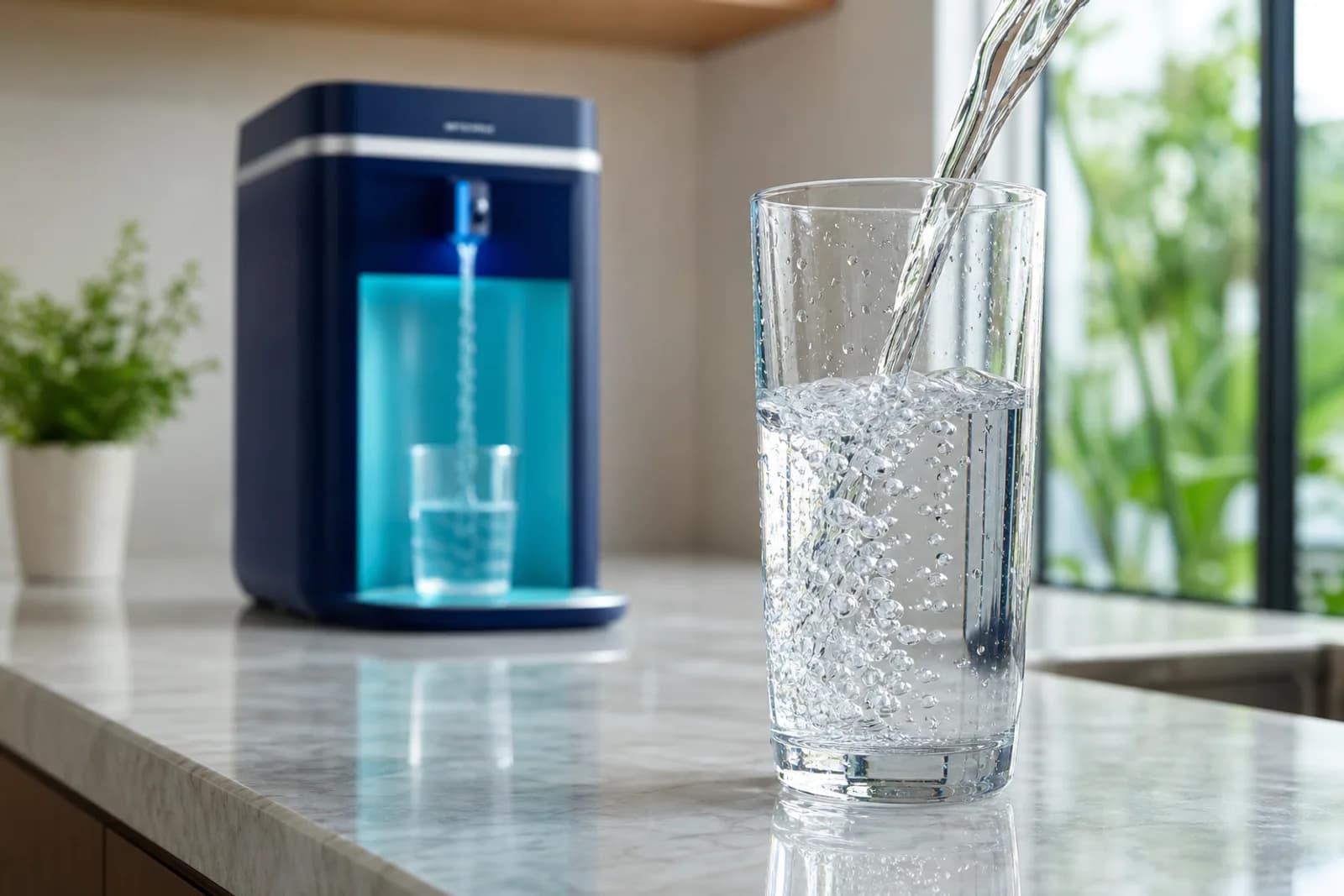
Reverse osmosis produces water with very little dissolved in it — including the calcium and magnesium that were in the source. That raises a fair question: is removing those minerals a health problem? For most people in most circumstances, no. The longer answer explains why, and shows where the genuine caveats sit.
What RO actually removes
An RO membrane has pores around 0.0001 micron wide — tight enough to block dissolved ions, not just particles. Pushing water across it under pressure removes:
- Dissolved salts and heavy metals — lead, arsenic, nitrates, fluoride, sodium, and others.
- Organic contaminants — a broad range of pesticides, pharmaceuticals, and industrial compounds are substantially reduced.
- Bacteria, viruses, and cysts — all physically larger than the pore, so all blocked.
- Dissolved minerals — calcium, magnesium, and potassium are rejected alongside everything else.
The result is water with a very low TDS reading, commonly below 50 ppm from a well-maintained system. That figure is not a health score; it is a measure of dissolved load. Clean does not mean stripped of something the body needs.
Does reverse osmosis remove minerals you can't do without?
Calcium and magnesium are real nutrients. They appear in drinking water because they dissolve naturally from rock and soil, and their presence is one reason mineral water has long been considered beneficial. So removing them sounds like a loss worth worrying about.
What matters is the practical scale of that loss.
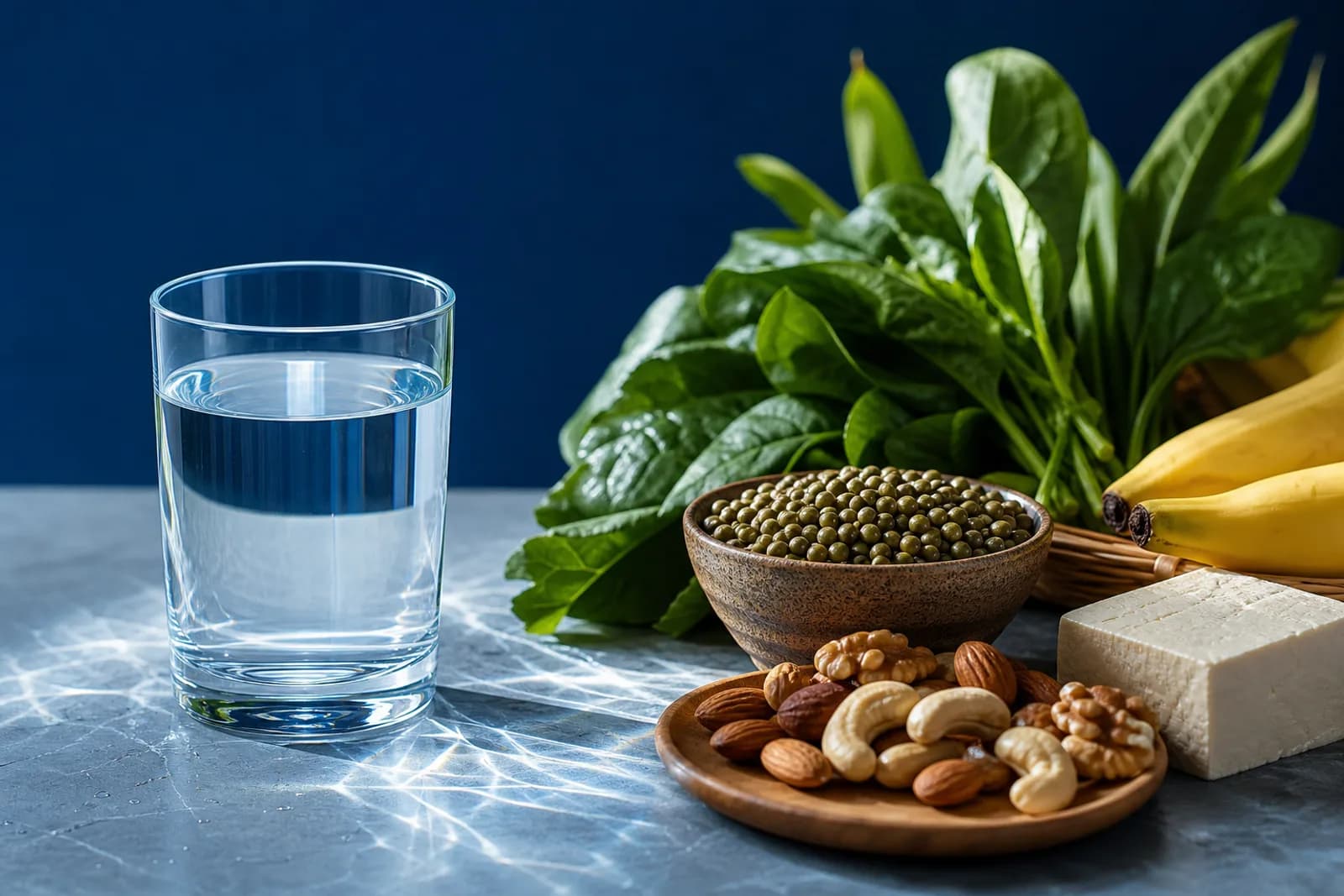
For most people, food provides the overwhelming majority of dietary calcium and magnesium. Dairy, vegetables, legumes, nuts, and grains all carry these minerals in quantities that far exceed what even mineral-rich water contributes. Water is a secondary source, not a primary one. Removing it rarely creates a clinical deficiency in someone eating a reasonably varied diet.
Water is not negligible everywhere, though. Some populations — particularly where diets are low in dairy, where water is the main calcium intake, or where total caloric intake is low — do draw a meaningful share of their minerals from water. The World Health Organization has reviewed this question and noted that very low-mineral water should not be the sole dietary source of essential minerals for such groups. That is a context-specific caution, not a blanket verdict against RO water.
Is low mineral water bad for you over the long term?
Research into very low-mineral water and health outcomes points in a broadly consistent direction: in populations with adequate food intake, there is no convincing evidence of harm from drinking demineralised water over the long term. The concern is not baseless — it is just that the minerals in food typically cover the difference.
The science gets more pointed in specific scenarios: prolonged use among infants fed formula mixed with very low-mineral water, where there is a theoretical concern about sodium and mineral balance in early development, and populations in parts of the world where food intake is limited. Neither situation describes most urban Indonesian households with access to a varied diet.
The minerals in your mie goreng matter more to your calcium balance than whether your water went through an RO membrane.
Remineralisation: taste and preference, not rescue
Many RO systems — including several in the Truliva RO range — add a post-membrane remineralisation stage. A small cartridge of calcium and magnesium carbonate restores a portion of the minerals after filtration, typically lifting the output TDS into a mild 50–150 ppm range.
This solves a real complaint: pure RO water can taste flat. The slight mineral content improves mouthfeel and rounds out the flavour. That is the honest reason most people who notice the difference prefer it.
Remineralisation is not correcting a health deficiency. Treat it as a finishing step for taste — a legitimate reason to choose a system that includes it, but not evidence that the water without it was harming you.
When low-mineral water genuinely matters
There are circumstances where this question deserves real attention rather than passing worry.
Infants under six months fed formula reconstituted with RO water are the clearest case. Paediatric guidelines in several countries recommend water with at least a baseline mineral content for formula, because formula or breast milk is the infant's entire diet. Check with your paediatrician; many recommend a system with remineralisation for this use.
People on very restricted diets — limited eating for medical reasons, for example — have less dietary buffer, so the marginal contribution from water is larger. Here too, medical advice takes precedence over general guidance.
Extended exclusive consumption with no other mineral sources is a theoretical edge case for most adults on a normal diet.
For everyone else: if you are eating meals, your mineral intake from RO water is not the variable that needs managing.
The real safety question RO does answer
Framing minerals as the main concern about RO misses why the technology exists in the first place.
Jakarta and other Indonesian cities draw PDAM piped supply that travels through ageing infrastructure — lead from old solder joints, bacterial contamination from pipe breaches, and occasional heavy-metal spikes are documented concerns. Coastal areas and much of East Java contend with groundwater affected by saltwater intrusion and agricultural runoff. Air galon refill (air isi ulang) stations vary widely in how rigorously their own membranes are maintained.
RO is the most thorough barrier available in a household unit. The reason to choose it is what it removes — heavy metals, nitrates, bacteria, organic compounds — not what it keeps. Treating mineral removal as the headline concern inverts the priorities.
A straightforward summary
| Concern | Reality |
|---|---|
| RO removes minerals | True — it removes calcium, magnesium, and other dissolved ions |
| This causes mineral deficiency | Unlikely for adults eating a normal diet |
| RO water is harmful long-term | No convincing evidence for healthy adults |
| Remineralisation is necessary | Not for health; useful for taste |
| Infants and restricted diets need care | Yes — take paediatric or medical advice |
| RO removes serious contaminants | Yes — lead, arsenic, nitrates, bacteria, and more |
The mineral worry is real enough to take seriously, and simple enough to answer plainly: RO water is safe to drink for the vast majority of people. For households dealing with hard groundwater, borehole sources, or uncertain PDAM quality, it is the sensible choice. And if taste matters to you, a system with a remineralisation stage handles that — a perfectly good reason to choose one.
Not sure which system fits your water?
Aright Marketing Indonesia can assess your supply and recommend the right Truliva system for your home or business in Indonesia.