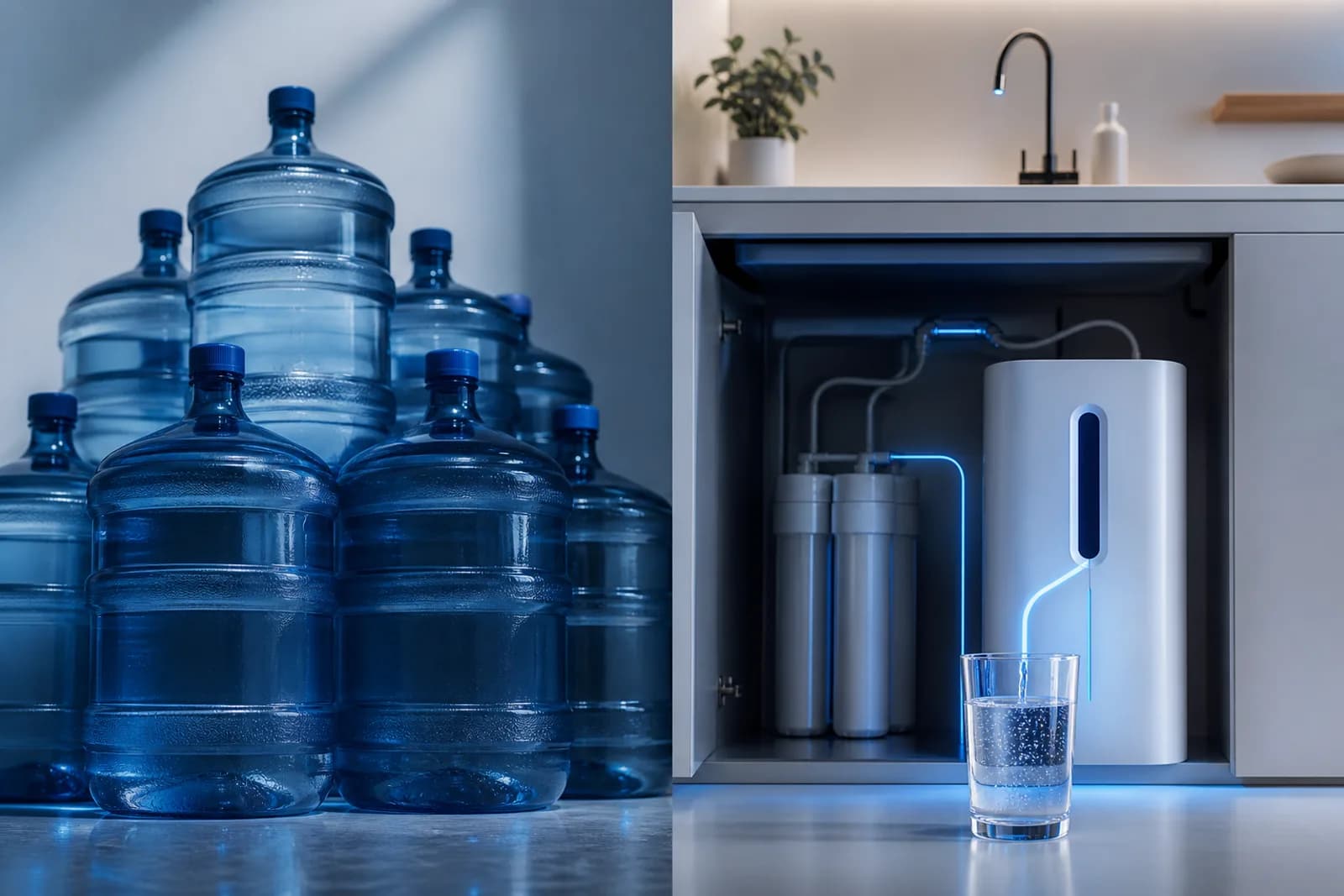
Is Air Galon Refill Water Actually Clean?
Refill depots are cheap and close to home, but the water quality rides entirely on how each depot is run. Here is how the treatment works, where contamination creeps in, and how to judge a depot before you fill up.
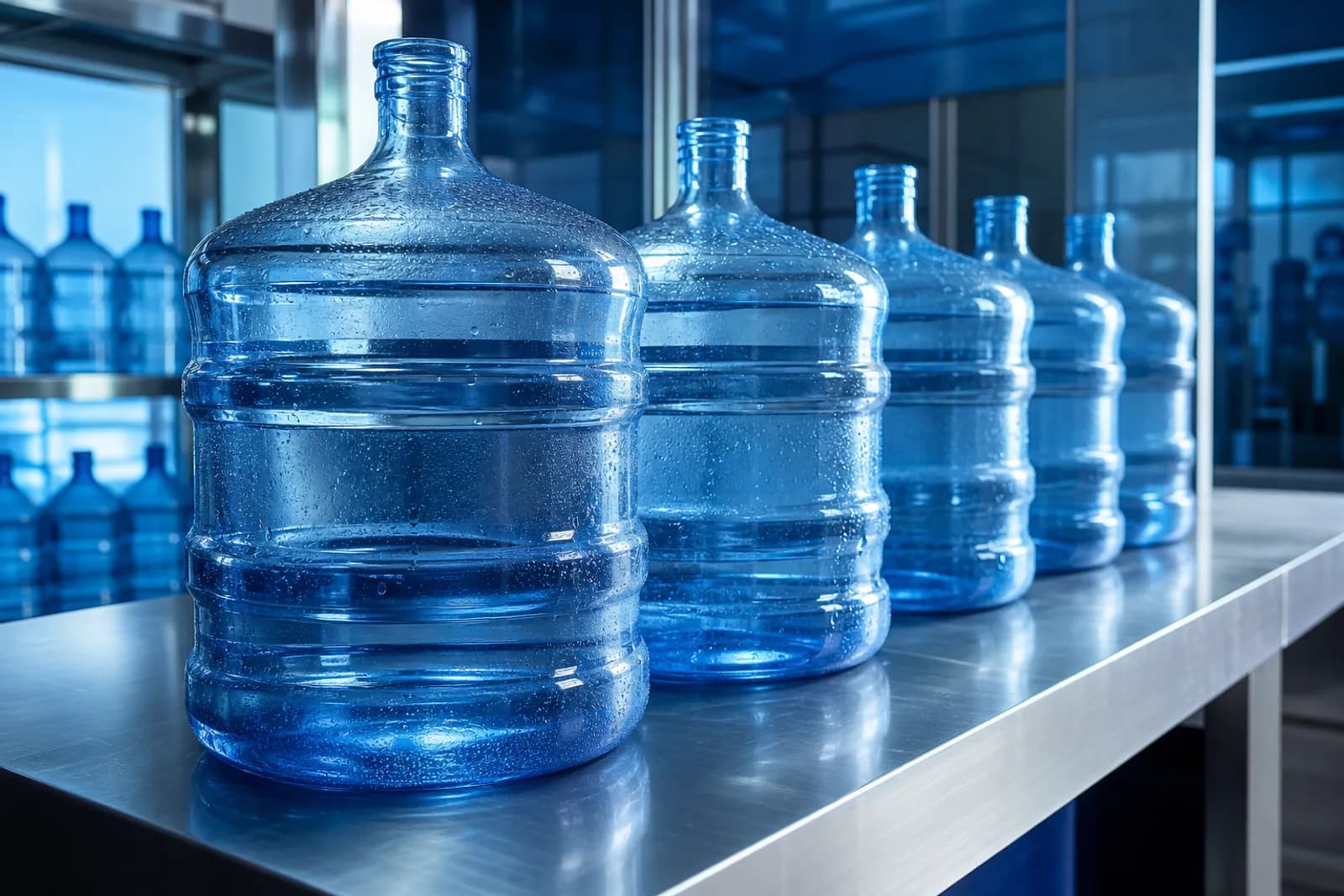
Air galon isi ulang is the daily drinking supply for tens of millions of Indonesian households. A 19-litre refill costs a fraction of a branded sealed gallon, the depot is usually minutes away, and the business is everywhere from Jakarta's gang alleys to provincial market towns. Whether the water inside is safe to drink depends on a chain of decisions the depot owner makes — not on the price, and not on the convenience.
This is not a case against refill water. It is a clear-eyed look at how the treatment works, where the chain can break, and what a careful household can do about it.
How a licensed depot is supposed to work
Formal air minum isi ulang (AMIU) depots operate under a government licensing system, and a compliant depot should run a minimum treatment sequence that looks roughly like this.
Raw source water — commonly from a protected spring, a drilled well, or a bulk tanker supply — passes first through a sediment pre-filter that strips visible particles. It then moves through one or more activated carbon stages to remove chlorine, organic compounds, and odour. From there, most reputable depots use either a reverse osmosis (RO) membrane or an ultraviolet (UV) disinfection lamp, and the better ones run both in sequence. The RO membrane removes dissolved solids, heavy metals, and microorganisms in one pass; the UV stage kills bacteria or viruses that might otherwise survive into the storage tank. Final delivery is through a dispensing nozzle into your container.
Run correctly, with fresh media and maintained equipment, that process produces water a test laboratory would declare potable. The word "correctly" carries all the weight.
Where the chain breaks
The gap between a well-run depot and a poorly-run one is invisible from the outside. Several failure points are common enough to be worth knowing.
Filters past their service life. Activated carbon cartridges and sediment pre-filters have finite capacity. Once a carbon block is exhausted, it no longer adsorbs organics — and it can begin to shed bacteria it has accumulated. Cost pressure pushes many operators to stretch the replacement interval, and there is no visible sign that a carbon filter has failed.
UV lamp degradation. A UV lamp dims steadily across its service life, commonly quoted at around 8,000 to 9,000 hours of operation. Past that point a lamp may look lit but deliver too little UV intensity to reliably inactivate pathogens. Without periodic intensity testing, operators often run lamps long after they have lost their effect.
Storage tank hygiene. Water held in a storage tank between production and dispensing is a contamination risk if the tank is not cleaned regularly. Tanks that are seldom drained and scrubbed develop biofilm — a layer of bacteria bonded to the inner surface that continuously seeds the water sitting above it.
Container sanitation. Your own gallon bottle is part of the treatment chain. Before refilling, a compliant depot should rinse or briefly flush the container. Many do; many do not. A bottle kept in a warm corner at home, shared by the family and loosely capped between uses, can carry more bacteria into the depot than it leaves with.
The nozzle. The dispensing nozzle touches every container that passes through. In a busy depot it is rarely cleaned between customers, which makes it a cross-contamination point — and one most consumers never look at.
What the surveys suggest
Water quality surveys of Indonesian refill depots, run periodically by health ministry and university researchers, consistently turn up a subset of depots with bacterial counts above the threshold permitted for drinking water. The proportion varies widely by region and by whether the depot holds a current licence. Reported findings commonly include E. coli or total coliform in a meaningful share of samples tested — not a majority, but enough to confirm that not every depot produces safe water all the time.
The same surveys also tend to find that depots with intact, current licences perform better on average than unlicensed operations. A licence is not a guarantee, but it is a signal worth looking for.
How to judge a depot
You cannot test the water yourself every week, but several observable factors are reasonable proxies for how disciplined a depot is.
- Licence display. A current operating permit (izin usaha) from the local health office should be on show. An expired permit, or none at all, is a red flag.
- Filter replacement records. Ask when the cartridges were last changed. A confident, specific answer — even an approximate one — suggests the operator tracks it. Vagueness suggests they do not.
- Container handling. Watch whether the operator rinses your bottle before filling. That one step costs seconds and matters.
- Nozzle condition. A nozzle that looks neglected and is never wiped down is a straightforward warning.
- Turnover versus tank size. A depot that fills a large tank and sells slowly gives that water more time to sit and degrade. High-turnover depots with fast sell-through are generally lower risk.
- Clarity and odour. Refill water should be colourless and odourless. Cloudiness, a musty smell, or a faint chemical note each points to something in the treatment sequence not working.
The container problem is yours to control
One variable you own entirely is the cleanliness of your own gallon bottle.
HDPE plastic gallon bottles — the standard blue-tinted 19-litre type — are not permanent. Repeated washing, sun exposure, and knocks degrade the plastic over time, and the scratches that accumulate trap biofilm that rinsing cannot reach. As a rough guide, many water specialists suggest replacing a plastic gallon bottle after one to two years of regular use, though there is no single authoritative standard. Glass containers avoid plastic degradation altogether but are heavy and breakable.
Between refills, keep the bottle in a cool spot out of direct sunlight. Cap it straight after use, and never rest the nozzle end on an unclean surface.
A second barrier at home
Even with a good depot and a clean bottle, some households would rather not depend on a supply chain they cannot fully audit. A point-of-use filter on the tap, or a countertop unit, adds one more stage you control directly. Ultrafiltration removes bacteria and particles without stripping minerals, which makes it a practical, affordable backstop for households that mostly drink galon water. Reverse osmosis gives a more comprehensive barrier where dissolved solids or chemistry are also a concern.
The case for a home filter is not that refill water is unsafe by default. It is that a barrier you maintain yourself removes the one variable you can never see: what happened at the depot since the last time you filled up.
The short answer
Refill galon water from a well-run, properly licensed depot, dispensed into a clean bottle, is generally safe to drink. The risk is not in the idea of refill water — it is in the variation between depots and in the handling chain that follows the fill. Watching the depot's visible hygiene cues, looking after your container, and understanding where the process can fail puts you in a far better position than assuming any clear, cheap water is clean water.
Not sure which system fits your water?
Aright Marketing Indonesia can assess your supply and recommend the right Truliva system for your home or business in Indonesia.