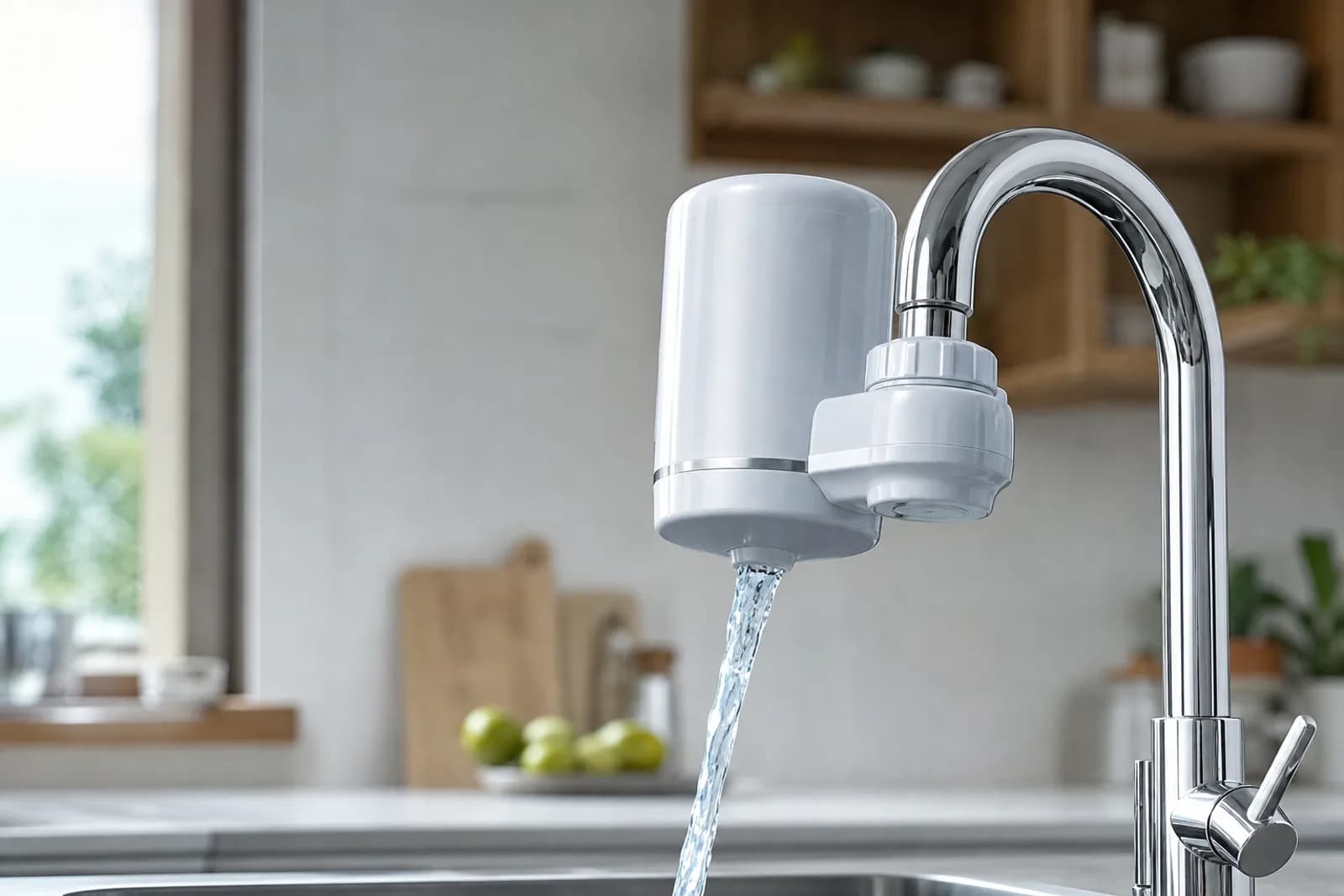
Do You Need a Pre-Filter? Sediment Pre-Filtration Explained
Sediment pre-filtration intercepts sand, rust, and suspended solids before they reach your purifier or appliances. Learn when a pre-filter is essential for Indonesian supply conditions — and when your system's internal stages are sufficient.
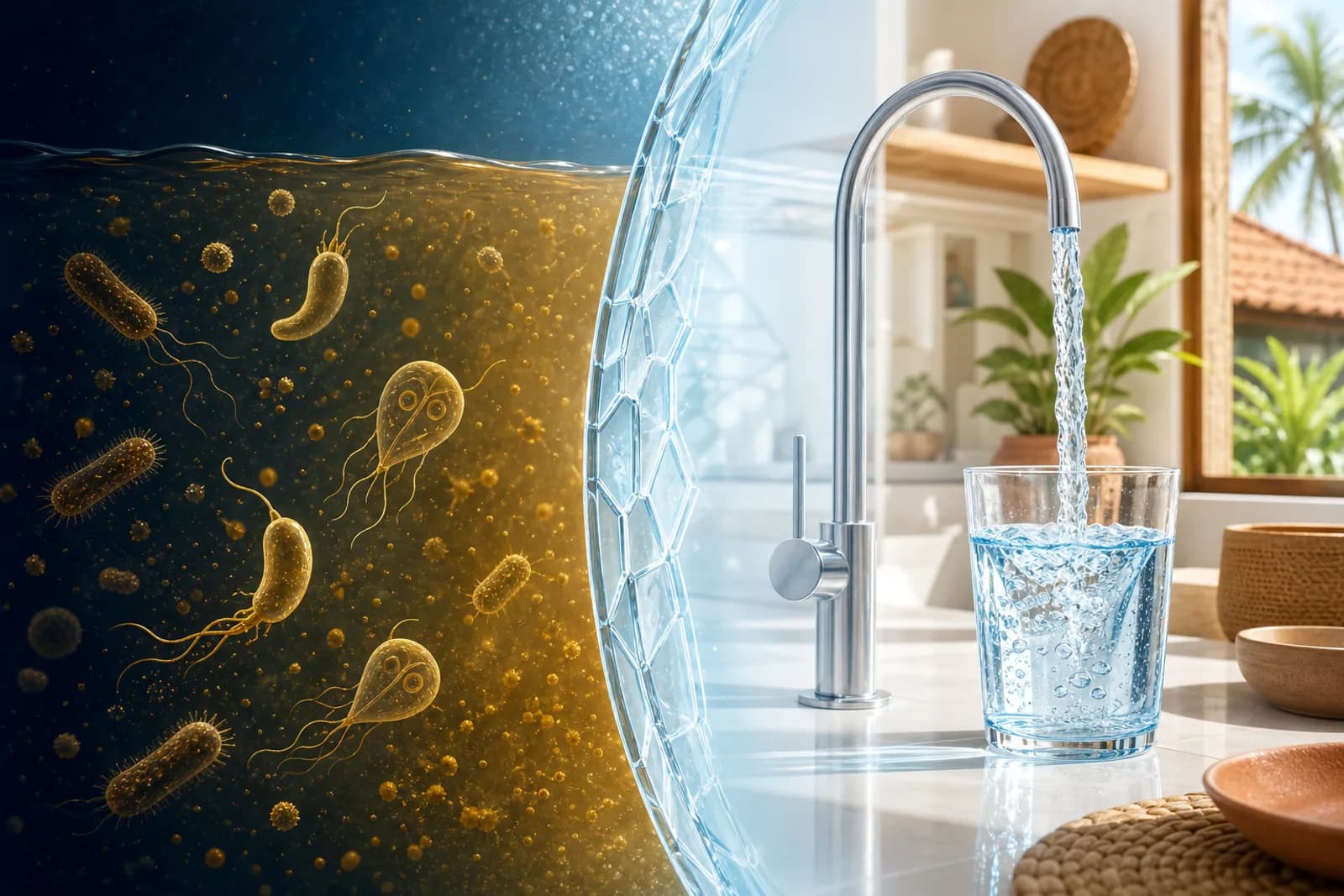
Whenever someone installs a new water purifier, the same question surfaces: does it need a pre-filter at the main inlet, or does the system handle everything internally? For most Indonesian homes, the source water conditions make the answer lean clearly toward yes — but understanding why helps you decide whether your situation is one of the exceptions.
What a pre-filter actually does
A pre-filter is a coarse mechanical filter installed at the main water inlet, upstream of any downstream equipment — the purifier, water heater, washing machine, or dishwasher. Its job is to capture suspended particles: sand, rust, silt, sediment, and physical debris that enters from the supply line.
It does not remove dissolved chemicals, chlorine, heavy metals, or microorganisms. That work belongs to the purifier downstream. The pre-filter intercepts the coarse, visible-to-near-visible load before it reaches components that were not designed to handle it — nothing more, nothing less.
Why Indonesian supply conditions make this relevant
Indonesian water supply varies considerably by location and building type. PDAM piped water in major cities is treated and chlorinated before it leaves the plant, but the distribution infrastructure between the treatment facility and your home can introduce contaminants of its own.
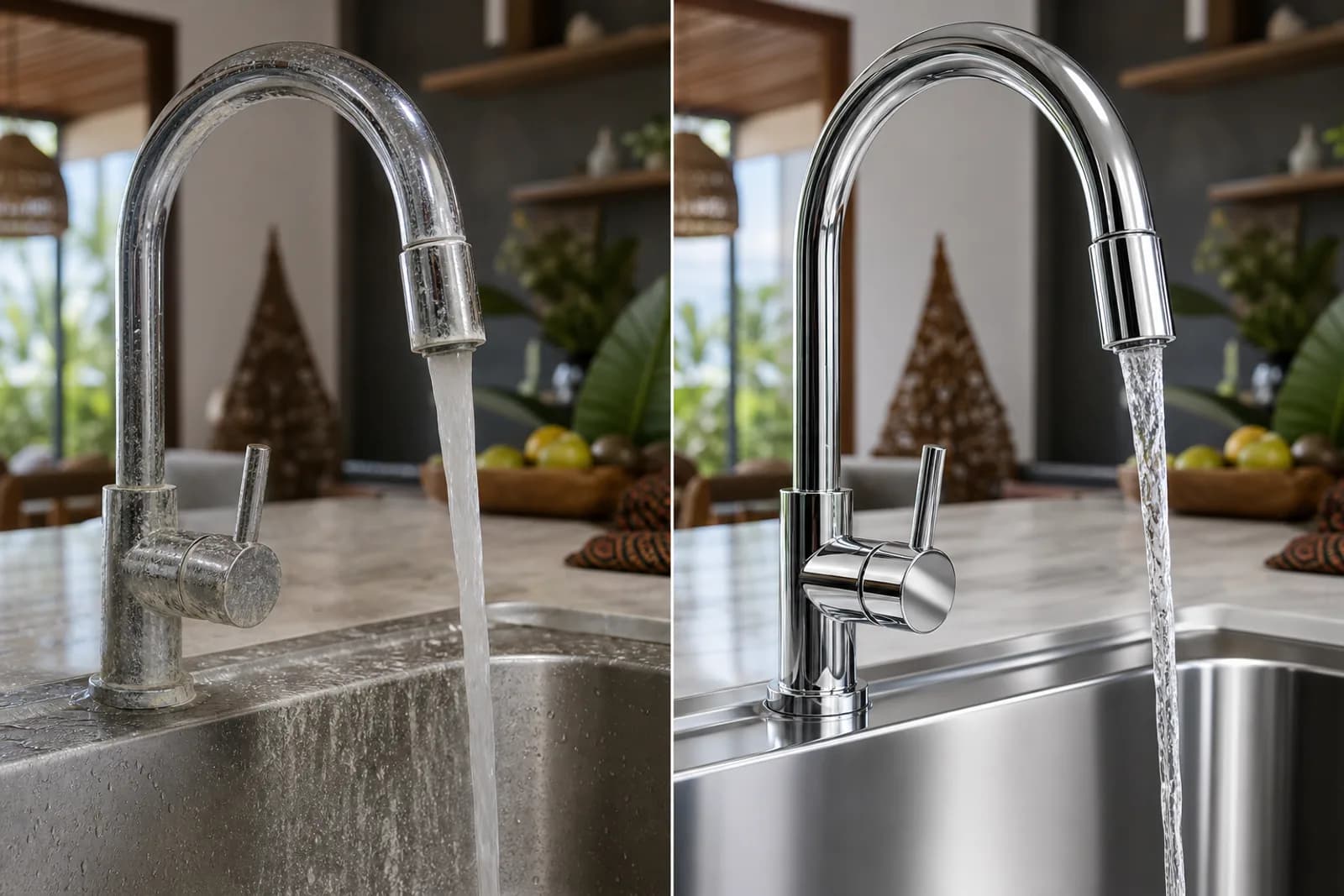
Ageing distribution pipes. Iron and galvanised steel pipes corrode from the inside over decades of service. The rust and scale they shed ends up in your supply line, visible as orange-brown discolouration on first draw — particularly after a pressure interruption. This is a distribution system problem that arrives at your tap regardless of how the water left the treatment plant. Buildings constructed before the 1990s in Indonesian cities may be more likely to have older iron pipework, though pipe composition varies widely and is rarely documented at the property level.
Groundwater and borehole supply (sumur bor). Borehole water carries whatever the soil layer contributes: fine clay, sand particles, and iron compounds. The sediment load is typically higher and less predictable than treated municipal supply.
Seasonal and rainfall effects. Heavy rainfall raises surface runoff into shallow wells and can increase turbidity in municipal networks as reservoir inflows spike. The effect is most pronounced in the wet season across Java and Sumatra, though the degree of impact depends on local infrastructure and catchment conditions.
What happens when sediment reaches your purifier
A purifier's first internal stage — typically a polypropylene (PP) sediment cartridge rated at 5 µm — is designed for fine filtration, not for managing a heavy coarse sediment load. When mains water carries significant sand and rust, several things follow:
Rapid cartridge fouling. The PP cartridge blinds faster than its rated service life. A cartridge nominally rated for six months may require replacement in two or three, adding recurring cost and inconvenience.
Reduced flow rate. As a clogged cartridge restricts flow, the system's booster pump (in RO systems) works harder against the added resistance. Sustained operation in this state accelerates pump wear.
Risk of sediment reaching the RO membrane. If the pre-stage clogs completely without the household noticing, larger particles can bypass a ruptured cartridge and score the membrane. An RO membrane damaged by sand is not recoverable — replacement is the only remedy.
Appliance damage. If the pre-filter question extends beyond drinking-water purifiers to water heater elements, washing machine valves, and shower heads, the consequences scale with the sediment load and how long it runs unchecked.
Choosing the right pre-filter: key parameters
Filtration accuracy (micron rating). Pre-filters for whole-home use are typically rated between 20 µm and 100 µm. Finer ratings catch more, but also restrict flow more and fill faster. For most Indonesian homes on PDAM supply, a rating in the 40–50 µm range is a practical balance: coarse enough to let the purifier's internal stages do their finer work, fine enough to capture the rust and sand fragments that cause real damage.
Flow rate. A pre-filter must pass enough water to serve the whole home without a meaningful pressure drop. Undersizing the flow rate causes low pressure at taps and showers during peak use. For a family household, a rated capacity of at least 5–7 tonnes per hour (T/h) is a useful minimum.
Flush mechanism. Pre-filter housings accumulate captured sediment. Manual ball-valve flush systems require someone to open a drain valve periodically — weekly or more often in high-sediment conditions — and run water to waste until it clears. In practice, this step is frequently deferred. Electronic automatic flushing removes the dependency on routine manual intervention: the controller triggers a flush on a set schedule, typically every few days, without any action from the household. Auto-flush units tend to maintain flow rate and filter life consistently over time; manual-flush units of comparable nominal specification often underperform because flushing is skipped.
Installation point. The correct location is at the main water inlet, upstream of any branch to the kitchen, bathrooms, utility room, or laundry. A single pre-filter installed here protects all downstream uses simultaneously.
The Truliva P-Q7712 Pre-Filter
The P-Q7712 is Truliva's whole-home pre-filter built for this upstream role. Key specs:
- Filtration accuracy: 40 µm — practical for protecting downstream purifiers while maintaining household flow
- Rated flow: 7 T/h constant — adequate for multi-bathroom homes and peak simultaneous demand
- Flushing: Electronic, automatic — scheduled flushing without manual intervention
- Installation: Main water inlet, whole-home or kitchen branch
The 40 µm rating positions the P-Q7712 as a coarse guard: it handles sand, rust, and larger sediment particles before they reach the RO or UF system's finer internal stages, extending the service life of those cartridges and the membrane. At 116 × 98 × 319 mm, it is compact enough for typical Indonesian utility cabinet or meter-room installation.
When you probably do not need a standalone pre-filter
Not every situation calls for an additional pre-filter at the inlet.
If your source water is genuinely low-turbidity year-round — no visible rust, consistent PDAM supply, recently upgraded distribution infrastructure in your area — the PP sediment stage built into your purifier may be sufficient. The practical test is cartridge life: if the first internal stage consistently reaches its rated service interval, the incoming sediment load is within the system's design tolerance.
If you are installing a system that already incorporates a dedicated pre-sediment stage at the inlet, adding a second upstream unit is redundant.
Counter-top purifiers in rental apartments with no access to the main inlet are the clearest case where a whole-home pre-filter is simply not feasible — the internal PP stage handles what it can, and cartridge life reflects incoming conditions.
A practical decision framework
Check the first draw. Run the tap before any household use in the morning. Hold a white cloth or glass under the flow for ten seconds. Visible particles, rust colour, or cloudiness are direct evidence of a sediment load that warrants upstream pre-filtration.
Consider your building's pipe age. If you know the building has older iron pipework — or cannot determine the pipe composition — treating the supply as potentially high in rust and sediment is the conservative and reasonable default.
Track your PP cartridge life. If the first internal stage of your purifier is fouling noticeably faster than the manufacturer's rated service interval, the incoming load is likely higher than the system was sized for. A pre-filter addresses this directly.
Weigh your downstream investment. If you have a high-specification RO system with a long-life membrane, upstream pre-filtration reduces wear on the most expensive components. In moderate-to-high sediment conditions, the avoided replacement cost over time can offset the pre-filter's purchase and installation cost — though the exact payback period depends on local water quality and cartridge pricing.
The bottom line
For most Indonesian homes drawing from ageing urban distribution infrastructure, borehole supply, or any source with detectable turbidity, a whole-home sediment pre-filter at the main inlet is worth the modest additional cost. It has a single job — keeping coarse debris out of everything downstream — and it does that job without requiring much attention, particularly with automatic flushing. The equipment it protects tends to last longer for it.
Not sure which system fits your water?
Aright Marketing Indonesia can assess your supply and recommend the right Truliva system for your home or business in Indonesia.