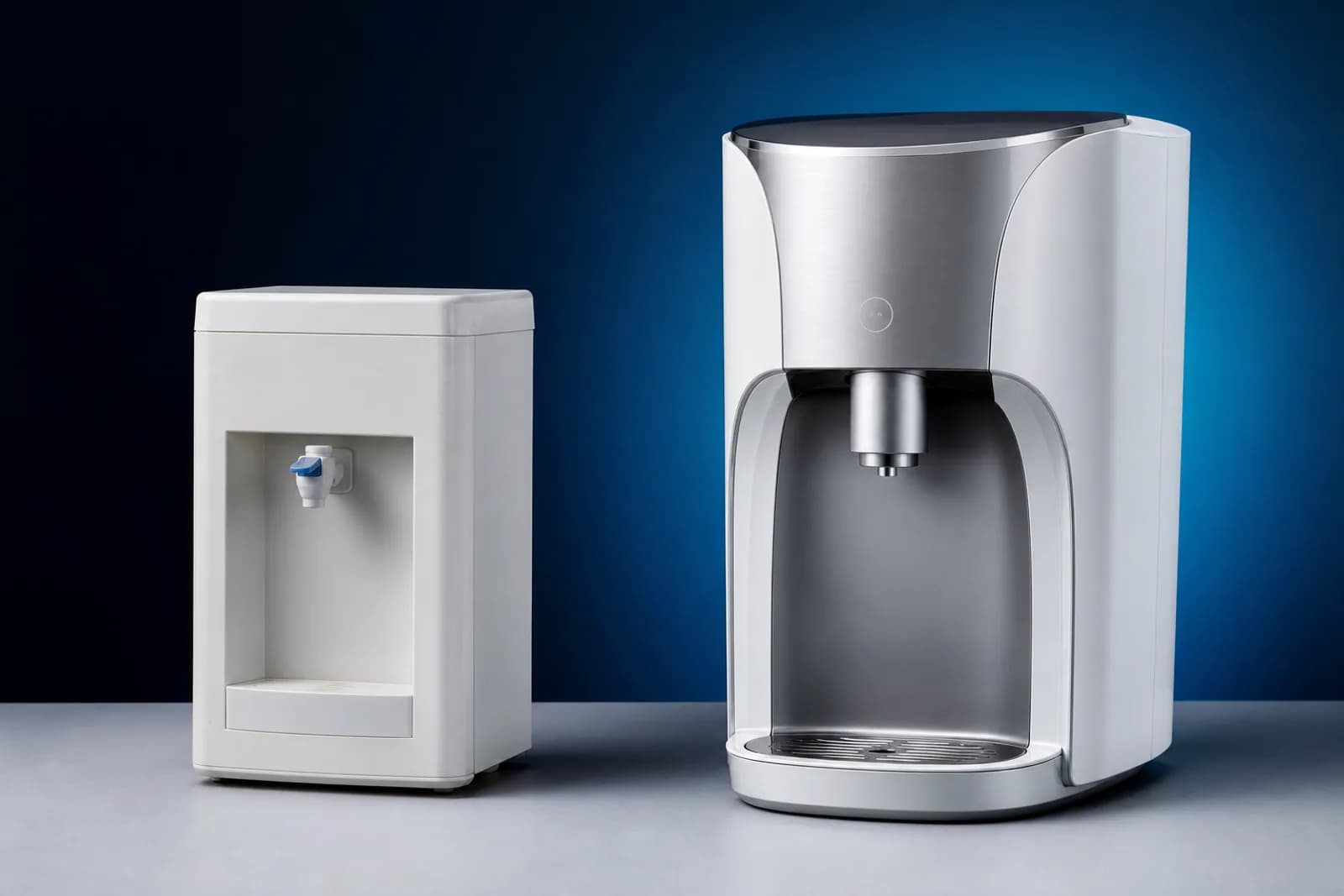
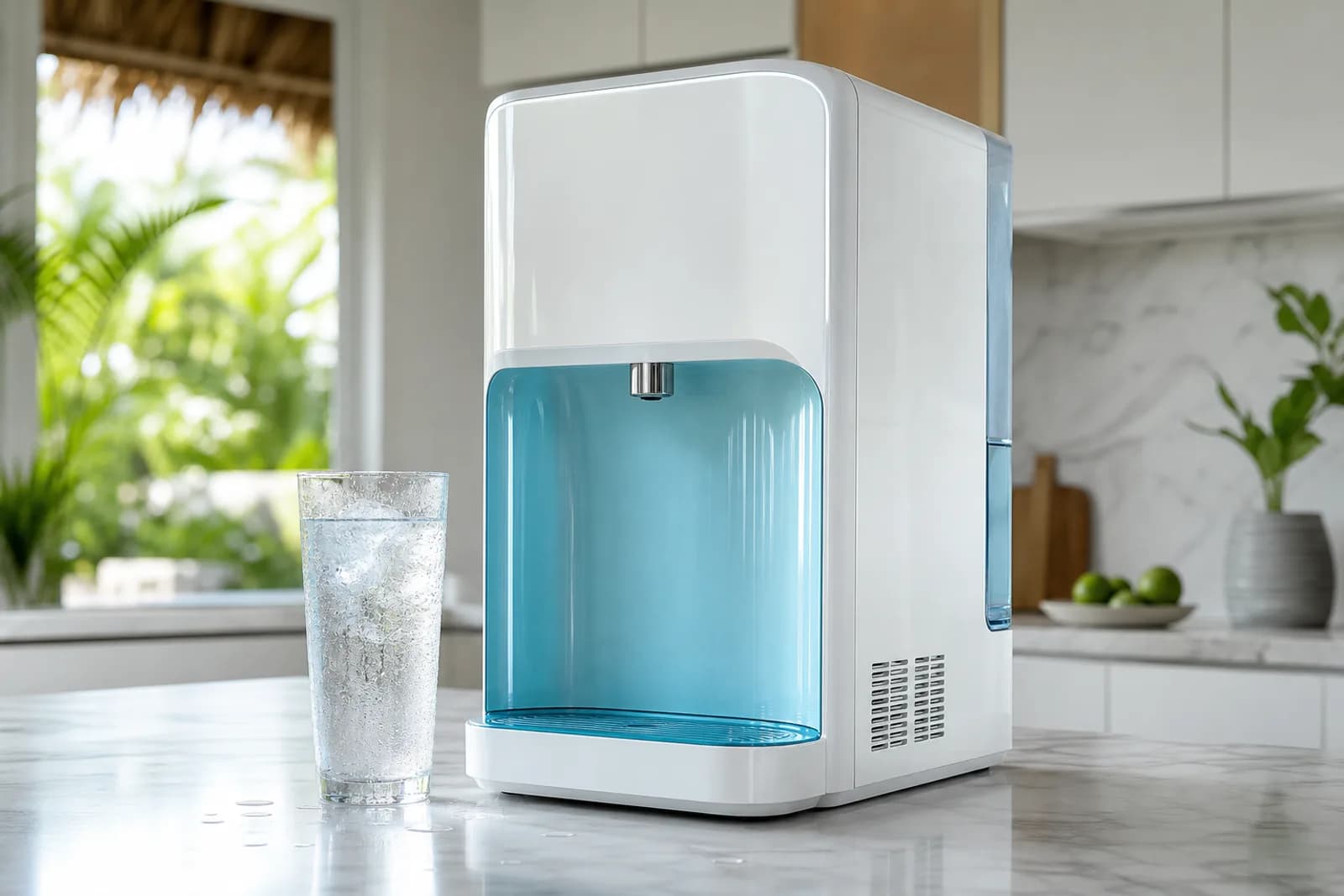
Hot and Cold Water Purifiers: A Buyer's Guide
Instant hot, compressor-chilled, or ice-making — built-in temperature functions change how a purifier fits into daily life. What to know before you buy, and the TRULIVA models that do each job.
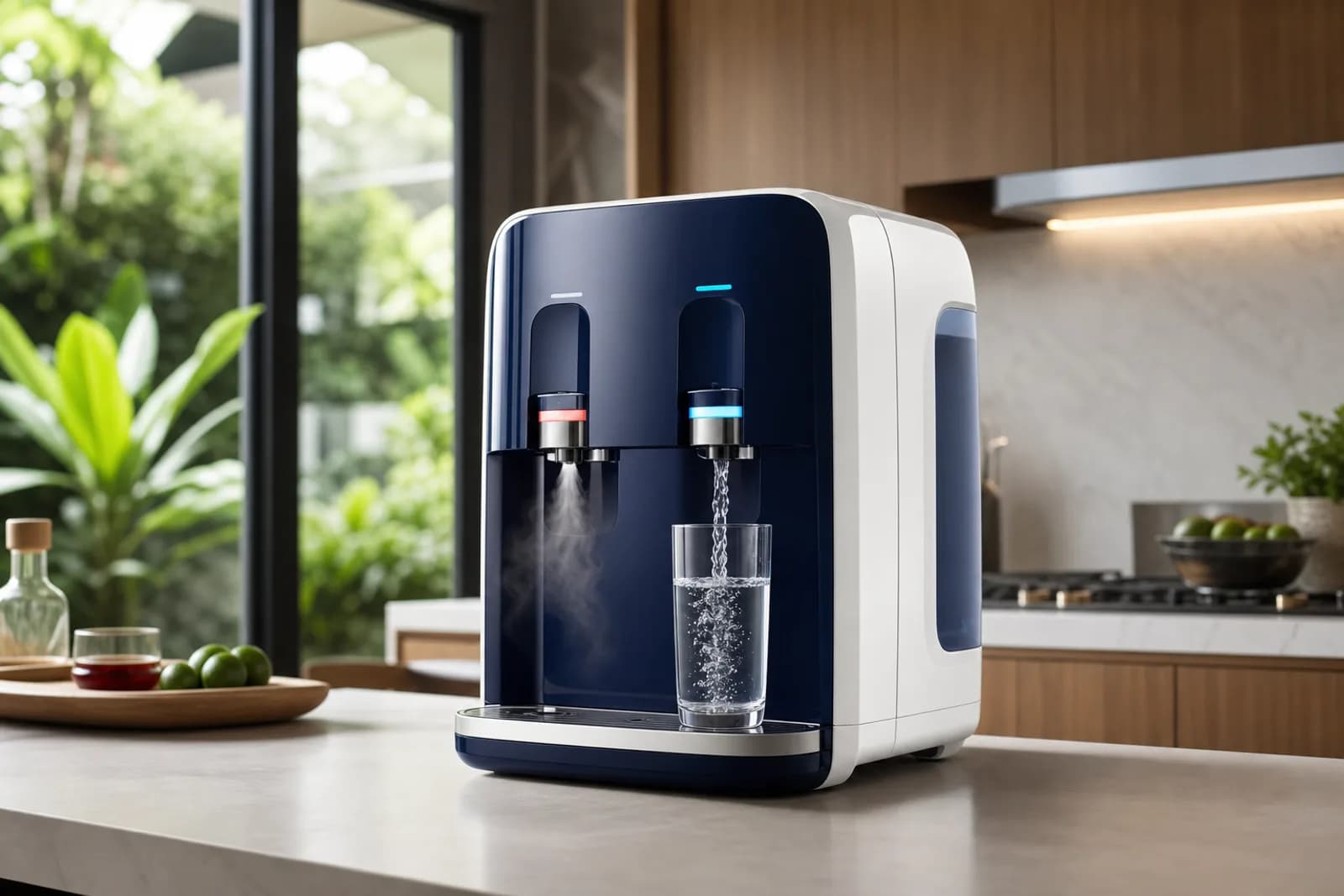
A purifier that also heats or chills does the work of two or three appliances at once — and for many households it clears the kettle, the chiller, and the bag of shop-bought ice off the worktop. But the temperature functions vary widely from model to model. Choose the wrong one and you either pay for capability you never use, or settle for water that is never quite hot or cold enough. This guide covers who benefits from each type, the energy and safety trade-offs, and which TRULIVA models do what.
Three distinct use cases
Hot-and-cold purifiers are not one product category. They cover at least three different needs, and treating them as interchangeable is how people end up with the wrong machine.
Instant hot, for cooking and hot drinks. The tap delivers hot water the moment you turn it. No kettle to fill, no waiting for an element to heat, no counter given over to a separate appliance. This suits households that make tea, coffee, instant noodles, or baby formula often and want filtered water to do it — not raw tap water, and not water that has sat in a kettle for hours.
Compressor-chilled or electric-cooled, for drinking. The purifier holds a chilled reservoir, so drinking water is cold on demand rather than room temperature. In Jakarta's heat, room-temperature filtered water is noticeably less pleasant than water at 5–10°C. Compressor cooling — the same principle as a refrigerator — gets water genuinely cold. Electric (thermoelectric) cooling is quieter and lighter but typically reaches only around 10°C, not a true fridge-cold 5°C.
Ice-making, built into the unit. A countertop machine that purifies, chills, and produces ice cubes with no plumbing connection. Useful for households that buy bagged ice, for offices that want cold drinks without a separate ice machine, and for living-room or open-plan setups where running a line to the kitchen is not practical.
How instant-hot works — and why three seconds matters
A conventional water heater keeps a large tank permanently hot, drawing power around the clock. A kettle heats a full litre or two even when you need one cup. An instant-hot purifier takes a different route: a small, heavily insulated cavity — commonly holding around 200–300 ml — stays hot and ready. Water in the cavity dispenses immediately; the small replacement volume reheats quickly.
Three seconds to hot water, as quoted on models like the UR-S61096H, means the faucet reaches dispensing temperature in that time — you are not standing through a heating cycle. The difference between three seconds and thirty is the difference between a faucet that behaves like a tap and one you have to wait on.
Over a day, a small instant-hot cavity generally draws less power than keeping a kettle plugged in or running a separate countertop heater, because you heat only what you use, when you use it. The exact figure depends on how often you draw hot water, but the arithmetic favours heating on demand.
Compressor versus electric cooling: what the difference feels like
Both methods bring filtered water below room temperature, but the result is not the same.
Compressor cooling runs on the same refrigeration cycle as your fridge. It reaches 5°C consistently — the cold that actually feels refreshing in tropical heat. The compressor adds a low hum while it maintains temperature, and draws more power than electric cooling, though it cycles on and off rather than running continuously.
Electric (thermoelectric) cooling is quieter, and the unit is lighter, which suits a countertop you move around. The typical floor is around 10°C — clearly cooler than a 30°C room, but closer to lightly chilled than properly cold. Coming from a household that refrigerates its drinking water, 10°C may feel like a step down. Replacing air galon bottles left out at room temperature, it is a clear improvement.
In short: choose compressor cooling if you want water that tastes genuinely cold; choose electric cooling if noise or portability matters more.
Safety on the hot side
A faucet that dispenses water above 90°C in a kitchen with children deserves the same respect as any hot appliance. A few things to check before you buy:
- Child lock on hot dispensing. Most purpose-built hot-and-cold purifiers use a two-step release — press-and-hold, or a separate unlock button — before hot water flows. Confirm it is present and deliberate enough that a small hand cannot trigger it by accident.
- Adjustable temperature. Many models let you set the hot output anywhere across roughly 38–98°C. With young children in the house, setting the working temperature to 60–70°C rather than maximum reduces scalding risk while still covering most hot-drink and cooking needs. For preparing baby formula, health guidance commonly recommends water of at least around 70°C to deal with bacteria in the powder — worth keeping in mind when you set the range.
- Insulated faucet. The faucet body itself should not get hot enough to burn on contact in normal use.
None of these is a reason to avoid a hot-water purifier. They are simply checks to run before you settle on a model.
The TRULIVA models
UR-S61096H — Under-Sink RO with Instant Hot
The UR-S61096H sits below the sink, connects to the cold supply, and delivers filtered water through a dedicated faucet. Filtration runs seven layers — the full RO sequence — and removes 99.9% of 104 substances at 1,000 GPD, with a constant 2.66 L/min flow.
The instant-hot function is built into the faucet itself: hot water in three seconds, across the standard hot-drink and cooking range. Water efficiency is 80%, so for every 10 litres processed only about 2 litres go to drain — a real improvement over older RO designs that wasted as much as they delivered.
The 8-year long-life RO membrane with anti-fouling flush makes this the lowest-maintenance option on membrane changes. At 440 × 145 × 420 mm it fits most under-sink cabinets alongside the usual drain and supply connections.
This model suits households that want instant hot at the kitchen tap without giving up counter space, and want the most thorough filtration barrier in the range — particularly relevant on groundwater or high-TDS supply.
CR-ZX5170 — Countertop RO with Ice and Hot
The CR-ZX5170 is free-standing and needs no plumbing: fill the reservoir, plug it in, and it runs. Six-layer filtration removes the same 104 substances; the compressor brings water to a genuine 5°C; hot water covers 38–98°C; and the ice maker produces cubes within seven minutes.
That combination in a no-install unit is unusual. The usual alternative is three separate things — a countertop RO, a chiller, and a bag of ice from the minimarket. The CR-ZX5170 replaces all three. At 450 × 250 × 426 mm it asks for a committed footprint, roughly the space of a microwave, but the function density earns it in the right household.
This model suits renters who cannot run under-sink plumbing, living-room or open-plan setups where a kitchen connection is awkward, and households that go through ice often enough that buying it by the bag is a standing cost and a nuisance.
CR-Z7170 — Countertop RO with Cool and Hot
The CR-Z7170 offers the same no-plumbing countertop proposition as the CR-ZX5170, minus the ice function, with electric cooling to 10°C rather than compressor cooling to 5°C. Six-layer filtration covers the same 104-substance removal, and the hot range is again 38–98°C. A 6.8-litre internal tank handles back-to-back pours without waiting for the RO to catch up.
Because electric cooling runs quieter and the unit carries no compressor, this is the right pick when ice is not needed and a quiet machine matters — a study, a bedroom, or a small office where the CR-ZX5170's compressor hum would be noticed.
The 6.8 L tank also suits households or small offices that draw in bursts: several people filling glasses from the same unit in quick succession.
Comparing the three side by side
| UR-S61096H | CR-ZX5170 | CR-Z7170 | |
|---|---|---|---|
| Type | Under-sink RO | Countertop RO | Countertop RO |
| Plumbing required | Yes | No | No |
| Hot water | 3-second instant | 38–98°C | 38–98°C |
| Chilled | — | 5°C (compressor) | 10°C (electric) |
| Ice | — | Within 7 min | — |
| Filtration stages | 7 | 6 | 6 |
| Output capacity | 1,000 GPD | — | — |
| Water efficiency | 80% | — | — |
| Tank | Tankless | — | 6.8 L |
| Footprint | Under counter | 450 × 250 mm | 450 × 250 mm |
Which one to choose
Choose the UR-S61096H if you own your home — or have the landlord's permission to run a supply line and drain — you want installation that keeps the counter clear, and you need instant hot at the kitchen tap. This is the highest-filtration option, and the one that disappears from view.
Choose the CR-ZX5170 if you need a no-plumbing solution with genuinely cold water and ice. The compressor cooling and integrated ice maker make it the most capable temperature package in the range for a unit that moves with you.
Choose the CR-Z7170 if you need a no-plumbing solution, do not need ice, and prefer a quieter machine or a larger tank. The 6.8 L reservoir suits a small office or a household that draws several glasses in succession.
If your water comes from a borehole, a coastal well, or any high-TDS source, all three use RO and handle dissolved-solids removal the same way. The choice between them is about installation, temperature, and form factor — the filtration barrier is equivalent across the range.
Not sure which system fits your water?
Aright Marketing Indonesia can assess your supply and recommend the right Truliva system for your home or business in Indonesia.