Descaling Hot Water Purifiers: Why Heated Units Scale Faster and What to Do About It
Heated water drives calcium and magnesium carbonate out of solution faster than cold water does. Here is why hot water purifiers and instant-hot units scale at the heating element, how to spot it early, and how to descale safely.
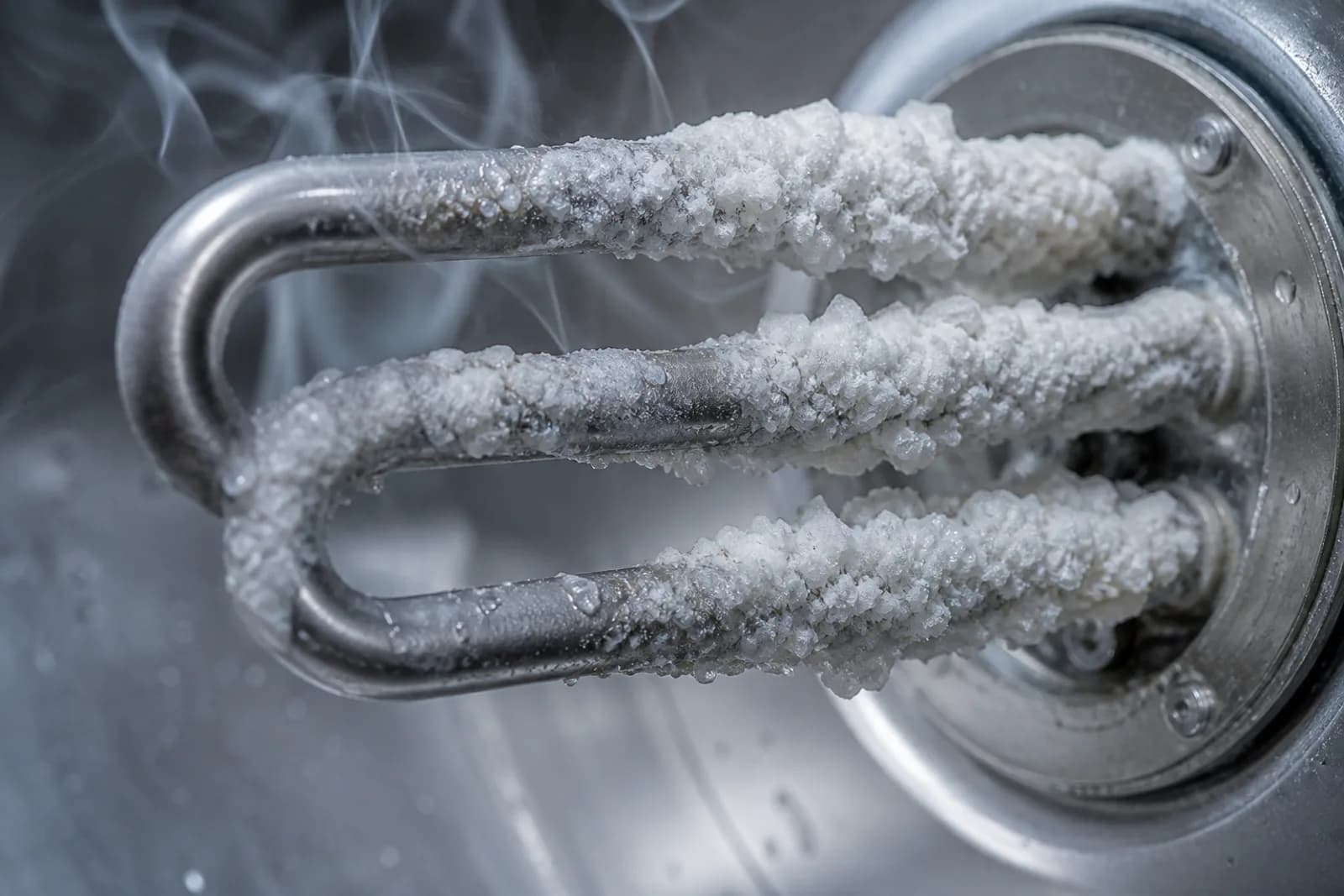
Scale builds faster in hot water than cold. This is basic chemistry, and it explains why the heating element inside a hot water purifier accumulates limescale much faster than the cold-water stages beside it. If your unit dispenses hot or instant-hot water, descaling belongs on your maintenance schedule — not saved as a one-off fix for when performance has already dropped.
Why heat makes scaling worse
Calcium is the main driver. In cold water, calcium travels dissolved in the form of calcium bicarbonate — stable, invisible, causing no immediate harm. Heat changes that stability. As water warms above roughly 60°C, the bicarbonate breaks down, releasing carbon dioxide and converting calcium into calcium carbonate, which is far less soluble. With nowhere to go in liquid form, it precipitates as a solid and deposits on the first surface it touches. In a hot water purifier, that surface is the heating element or the inner wall of the hot tank.
Magnesium behaves similarly, though calcium carbonate accounts for the bulk of what you see as white crust on heating surfaces.
The practical consequence: a tank or element running at 85–98°C in hard water will accumulate scale at a rate that a cold-water sediment stage or RO membrane never approaches. The hotter the set point, the faster the deposition. High-temperature instant-hot units — those that bring water to near-boiling in seconds — face this physics at its most concentrated.
How much harder this hits non-RO systems
Not all purifiers reach the heating stage with the same water. That difference largely decides how often you will need to descale.
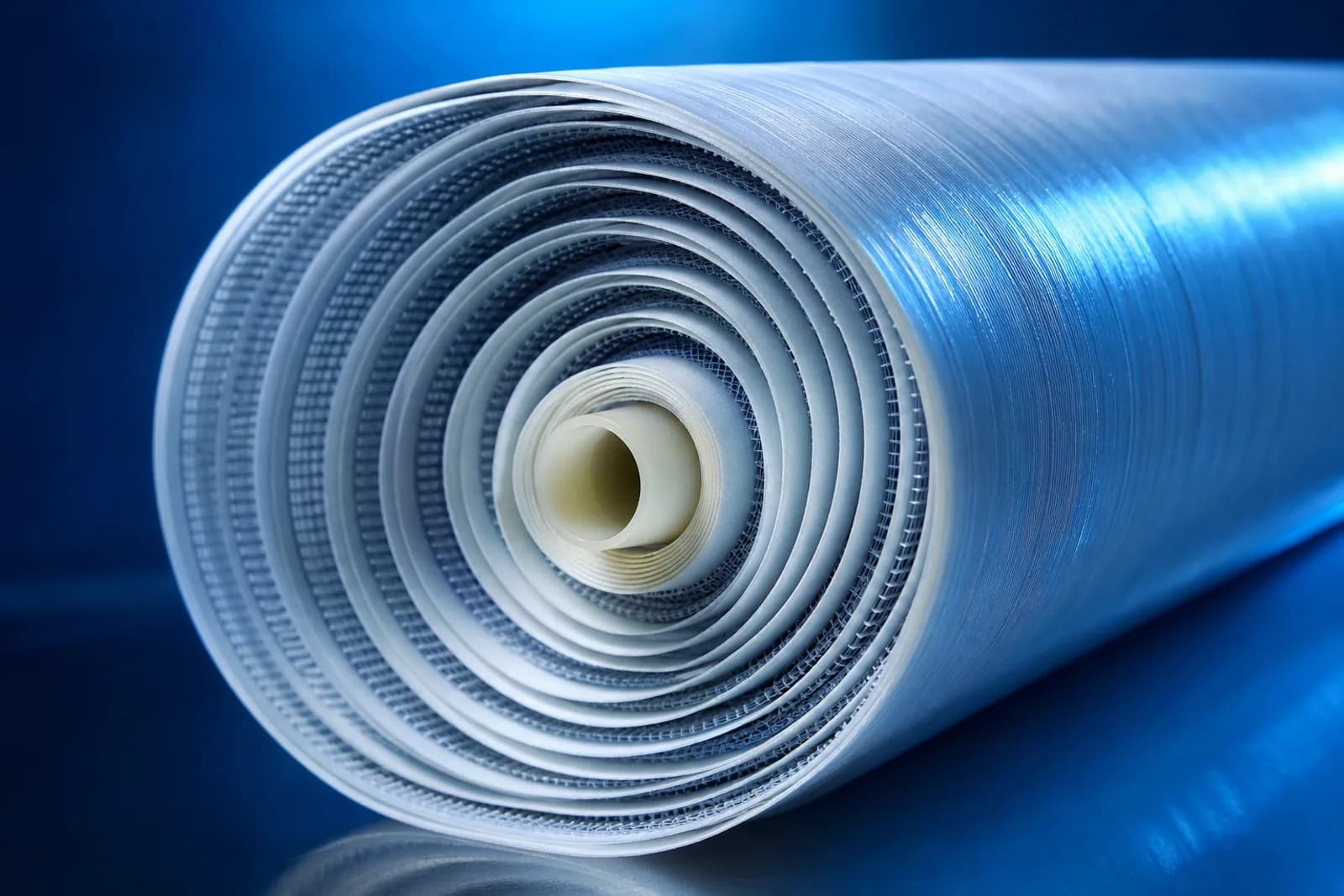
An RO-based hot water purifier passes water through a reverse osmosis membrane before it enters the hot tank. The membrane removes typically 90–99% of dissolved calcium and magnesium, so the water that actually gets heated is close to mineral-free. Scale still forms over time — residual hardness accumulates gradually — but the rate is dramatically lower than untreated supply.
A UF or carbon-only hot unit does not remove dissolved minerals. It filters particles, bacteria, and chlorine, but calcium and magnesium pass straight through to the heating stage in roughly the same concentrations as the incoming supply. In a hard-water household — borehole water in limestone terrain, or coastal groundwater with elevated mineral content — this means the heating element is working against full hardness from day one. Scale builds measurably faster, and descaling frequency needs to reflect that.
If your household is on PDAM supply in a major Indonesian city, incoming hardness is generally moderate. Borehole water (sumur bor) is far more variable: limestone geology in parts of Java, Sulawesi, and Nusa Tenggara can produce genuinely hard groundwater that a UF-only hot unit will struggle with. The only reliable way to know is to test — basic hardness test strips are available at aquarium shops and filter dealers across Indonesia.
Symptoms that tell you scale has built up
A well-scaled heating element does not fail dramatically. It degrades gradually, and the signs are easy to misread as other problems.
- Slower heating. The element is insulated by a layer of carbonate deposits. It takes longer to reach the target temperature, so hot water from a tank unit takes more time to arrive, and an instant-hot unit may dispense water that is slightly cooler than its rated output.
- Reduced hot-water flow. Scale deposits narrow internal passages over time. If the hot-water output has become a slower trickle than it once was, blocked passages are a plausible cause alongside a clogged filter stage.
- Knocking or rumbling noise. Trapped water pockets heating rapidly beneath a scale layer produce a rumbling sound from the tank — similar to what a badly scaled domestic water heater makes. This is a reliable indicator of significant build-up.
- White flakes in dispensed water. Chunks of dislodged carbonate scale occasionally break free and appear in the glass. This is not harmful chemically, but it confirms the build-up has reached a stage where active maintenance is overdue.
- Higher electricity consumption. A scaled heating element draws more power to deliver the same heat output. If your electricity use has crept up without an obvious reason, a scaled hot water unit is worth investigating.
Any one of these warrants inspection. Do not wait for all five.
How to descale: the safe method
The standard descaling agent for household water contact surfaces is food-grade citric acid. It is effective against calcium carbonate deposits, non-toxic, and widely available in powder form at supermarkets and baking supply shops across Indonesia. White vinegar (acetic acid) also works but leaves an odour that is harder to rinse out of small internal passages.
Before doing anything, check the manufacturer's manual. Most reputable brands publish a recommended descaling procedure and may specify a proprietary descaling solution or warn against certain chemicals (some internal components are sensitive to strong acids). Following that procedure protects both the machine and any warranty.
A general approach for tanks and hot circuits, where the manual does not say otherwise:
- Dissolve food-grade citric acid powder in water — commonly reported ratios range from 10–20 grams per litre, though the manual or descaler product instructions take precedence.
- Run this solution through the hot circuit or fill the tank with it, following the machine's flushing procedure.
- Allow it to sit for the dwell time specified in the manual (often 20–30 minutes for moderate scale).
- Flush thoroughly with clean water — multiple cycles — until there is no trace of acid taste or odour.
- Check the dispensed water before resuming normal use.
Do not use hydrochloric (muriatic) acid or other industrial descalers on drinking-water contact surfaces unless the manufacturer explicitly approves them.
How often to descale
There is no universal figure that applies across all conditions. A unit fed with near-distilled RO product water may need descaling once every year or two under normal use. The same unit fed with hard borehole water and without RO pre-treatment may need attention every three to six months.
The practical approach is to use the symptom list above as your primary signal and set the calendar as a fallback. For a first-time descale, inspect the heating element or check the visible condition of the tank when you open it — the degree of build-up will tell you whether you need to act sooner than the manual's default interval.
In Indonesia, households in areas known for hard groundwater should lean toward more frequent checks. The tropical climate is less relevant here than it is for bacterial filter degradation — scale formation is driven by water chemistry and temperature, not ambient heat.
Prevention is more effective than frequent descaling
Descaling clears existing deposits. It does not change the chemistry of the incoming water. In a hard-water household, the scale will simply return, and regular descaling is the ongoing maintenance cost of running a hot water system against hard supply.
The more durable fix is to address the hardness before water reaches the heating element.
RO at the inlet is the most thorough approach. Reverse osmosis removes nearly all dissolved calcium and magnesium so the water entering the hot circuit is already stripped of the minerals that cause scale. The trade-off is slower filtered output and regular membrane and pre-filter changes — but the heating element stays clean for far longer.
A dedicated water softener upstream replaces calcium and magnesium with sodium ions via ion-exchange resin, preventing scale formation without reducing flow rate. This protects all downstream appliances — the hot water purifier, the water heater, the washing machine — from the same hard supply.
Truliva's heated systems are built around this principle: the water that reaches the heating stage has already passed through reverse osmosis. The UR-S61096H under-sink RO unit delivers instant hot water in three seconds, and because the membrane removes hardness upstream, the heating circuit works against water that is already close to mineral-free. The countertop units CR-ZX5170 and CR-Z7170 take the same approach — RO filtration first, then heating to 98°C — keeping the hot circuit protected from the start.
For households on very hard borehole supply, pairing any hot water purifier with a pre-softener or an RO stage upstream is worth calculating against the ongoing cost of descaling and shortened heating element life.
The bottom line
Scale in a hot water purifier is a chemistry problem, not a mechanical fault. Heat pulls dissolved calcium out of solution and deposits it on whatever surface is closest — which in a hot water unit means the heating element. The harder your supply water and the higher the heating temperature, the faster this happens.
Watch for the five symptoms: slower heating, reduced flow, knocking sounds, white flakes, and rising electricity use. Descale with food-grade citric acid on the schedule the manual recommends, or sooner if symptoms appear. And if you are on hard borehole water and find yourself descaling frequently, the better long-term move is to deal with the hardness before it reaches the heater.
Not sure which system fits your water?
Aright Marketing Indonesia can assess your supply and recommend the right Truliva system for your home or business in Indonesia.